
Last updated August 25, 2026
Free on-site gate assessment - hinges, posts, and your LiftMaster or Nice gate operator checked before anything is quoted
The assessment is free and the quote is the invoice.

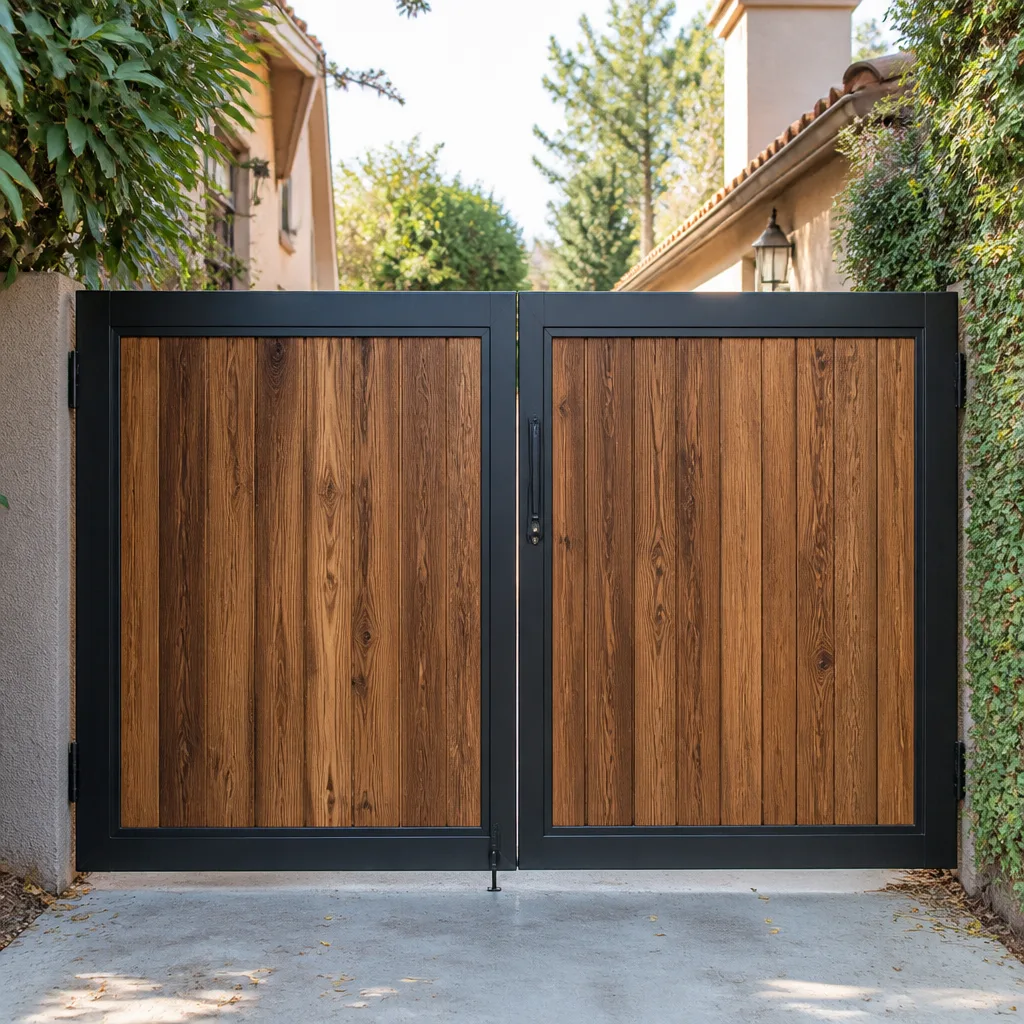
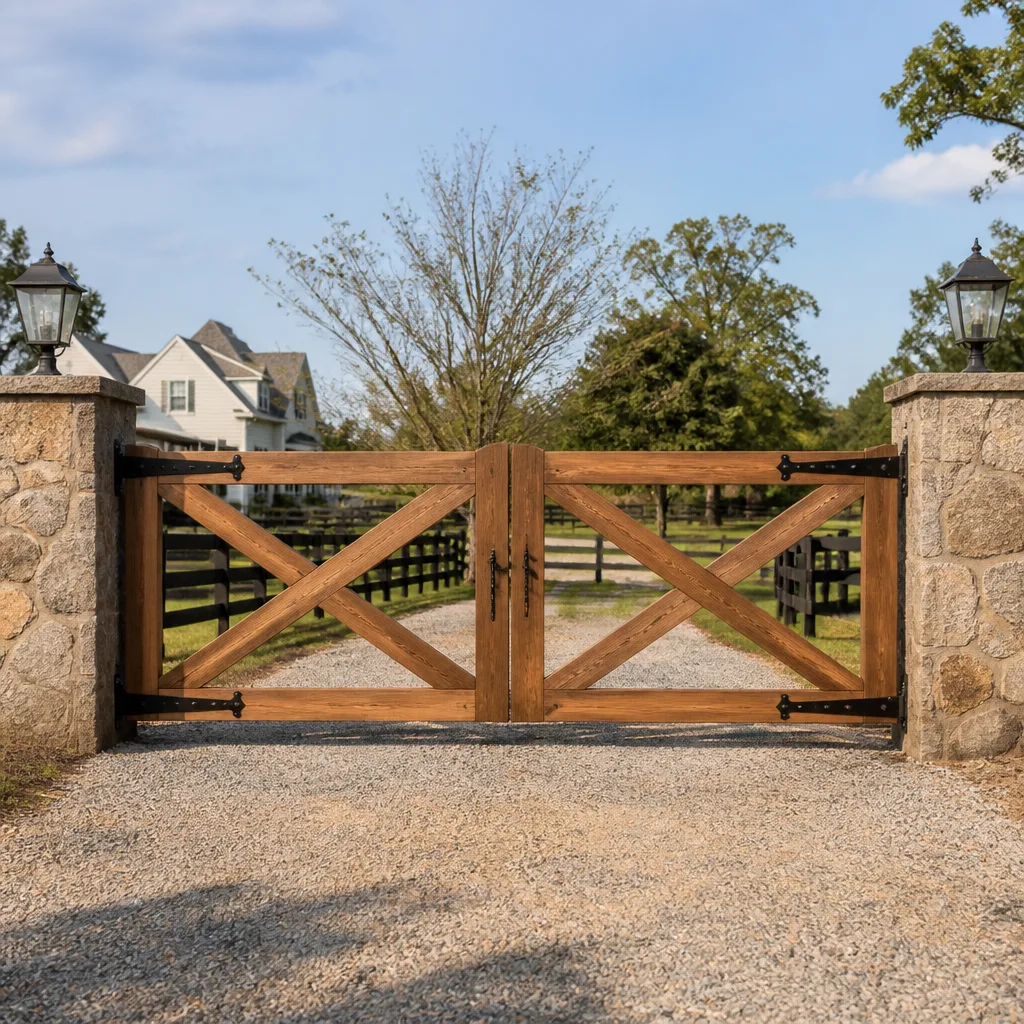
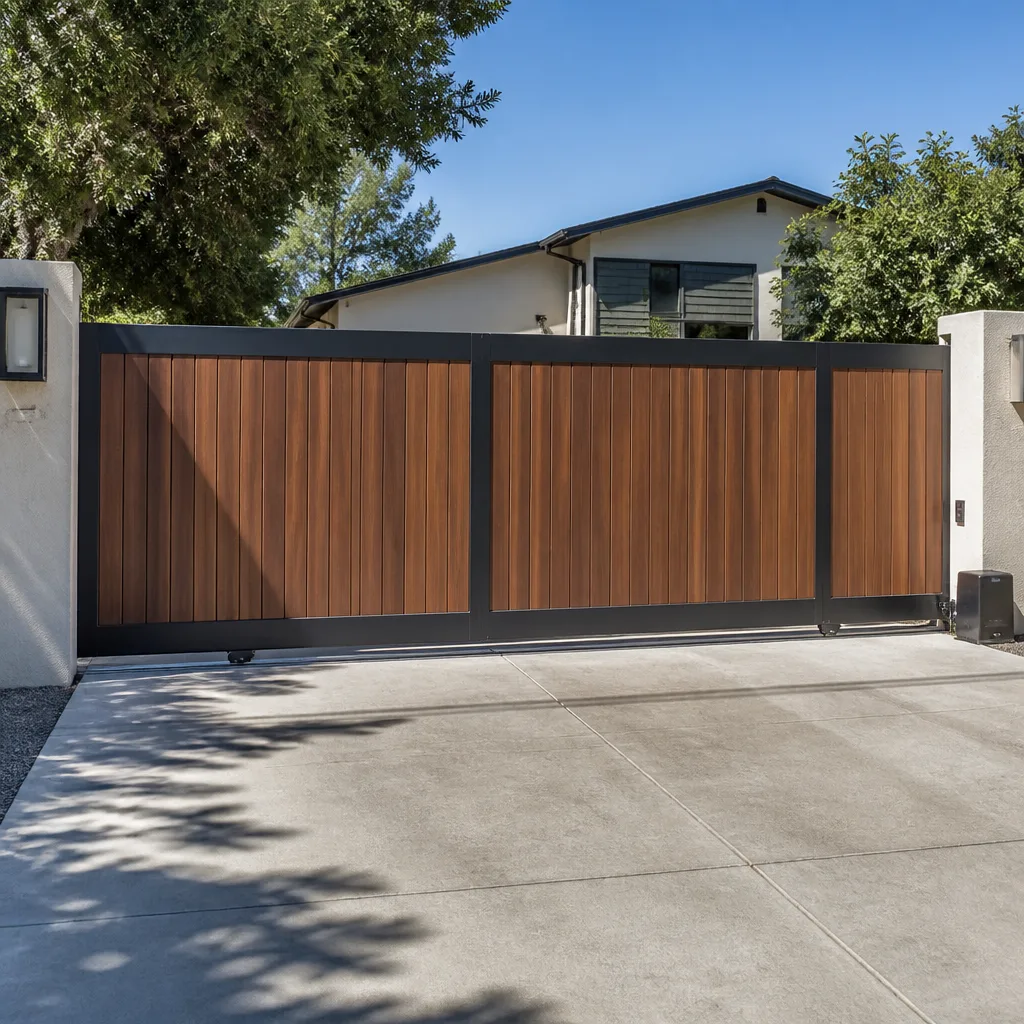
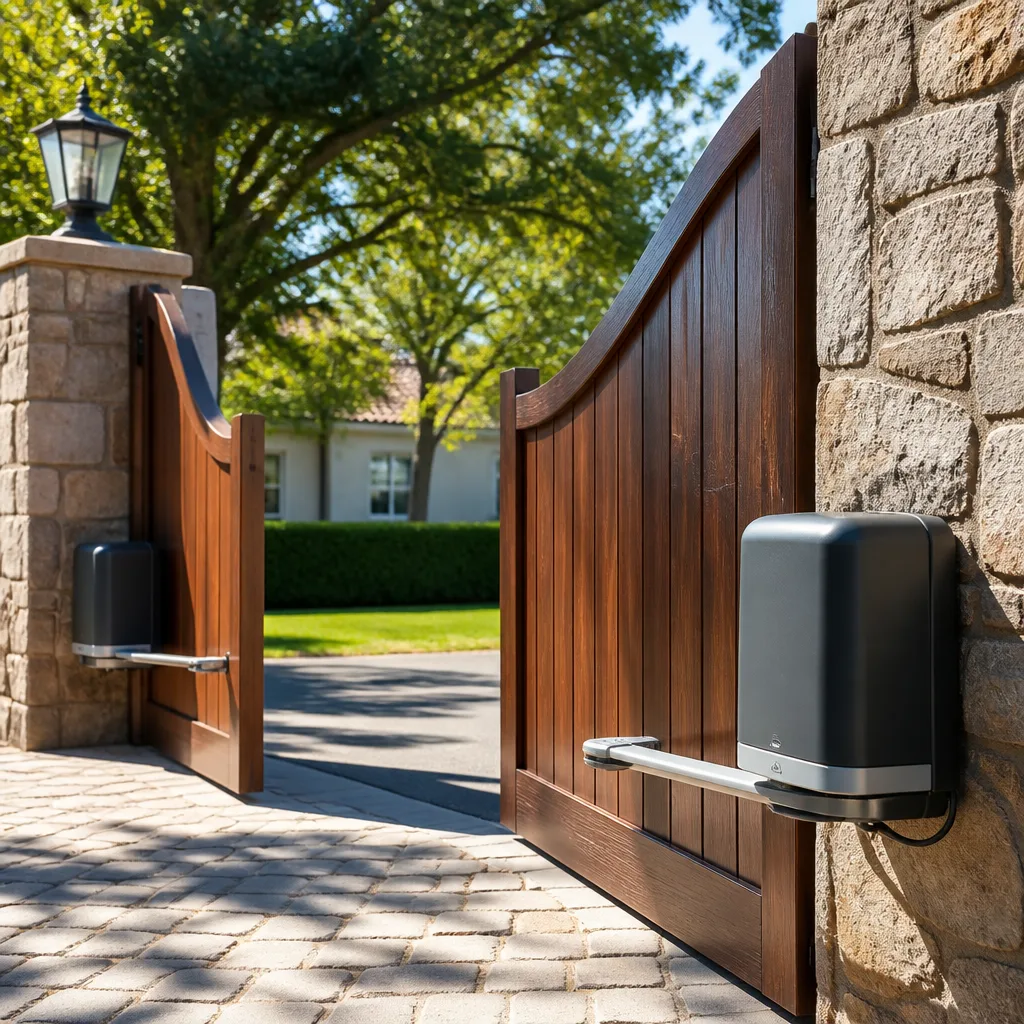
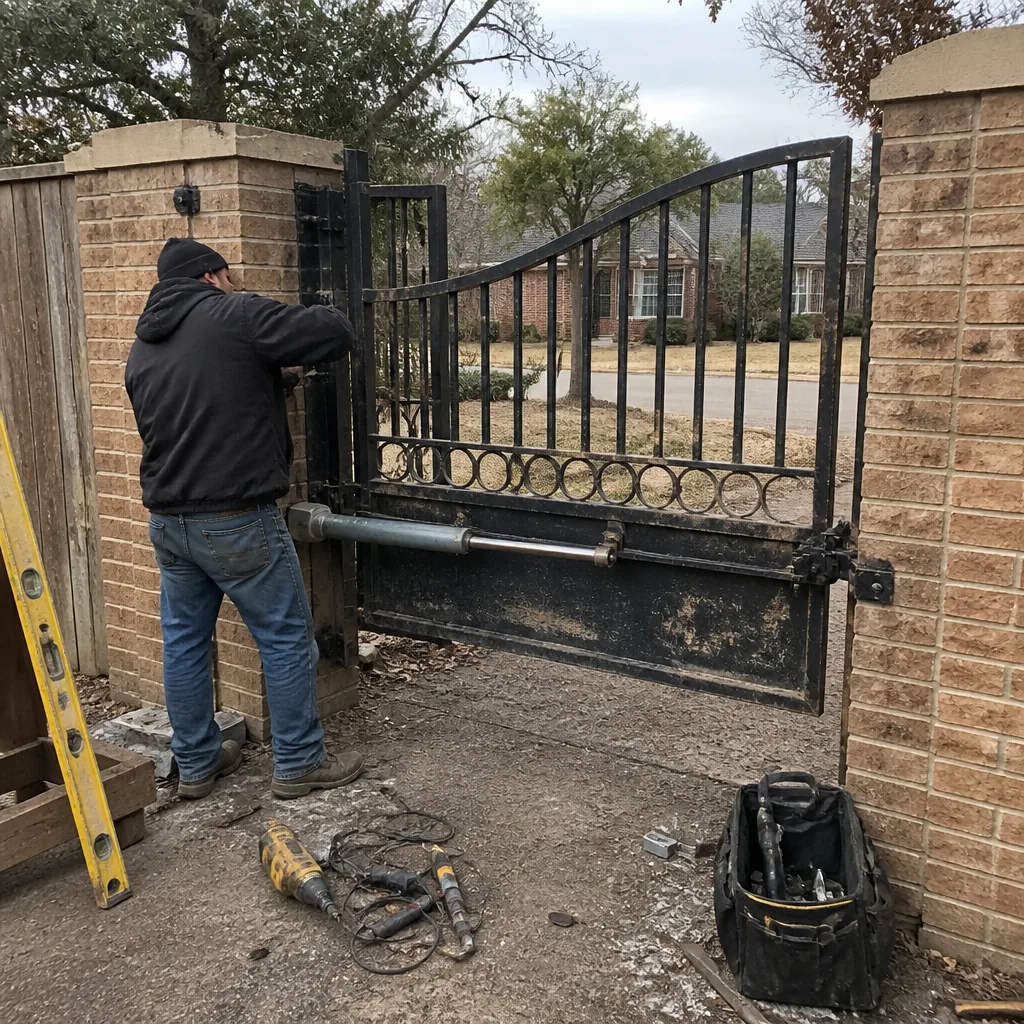 Before
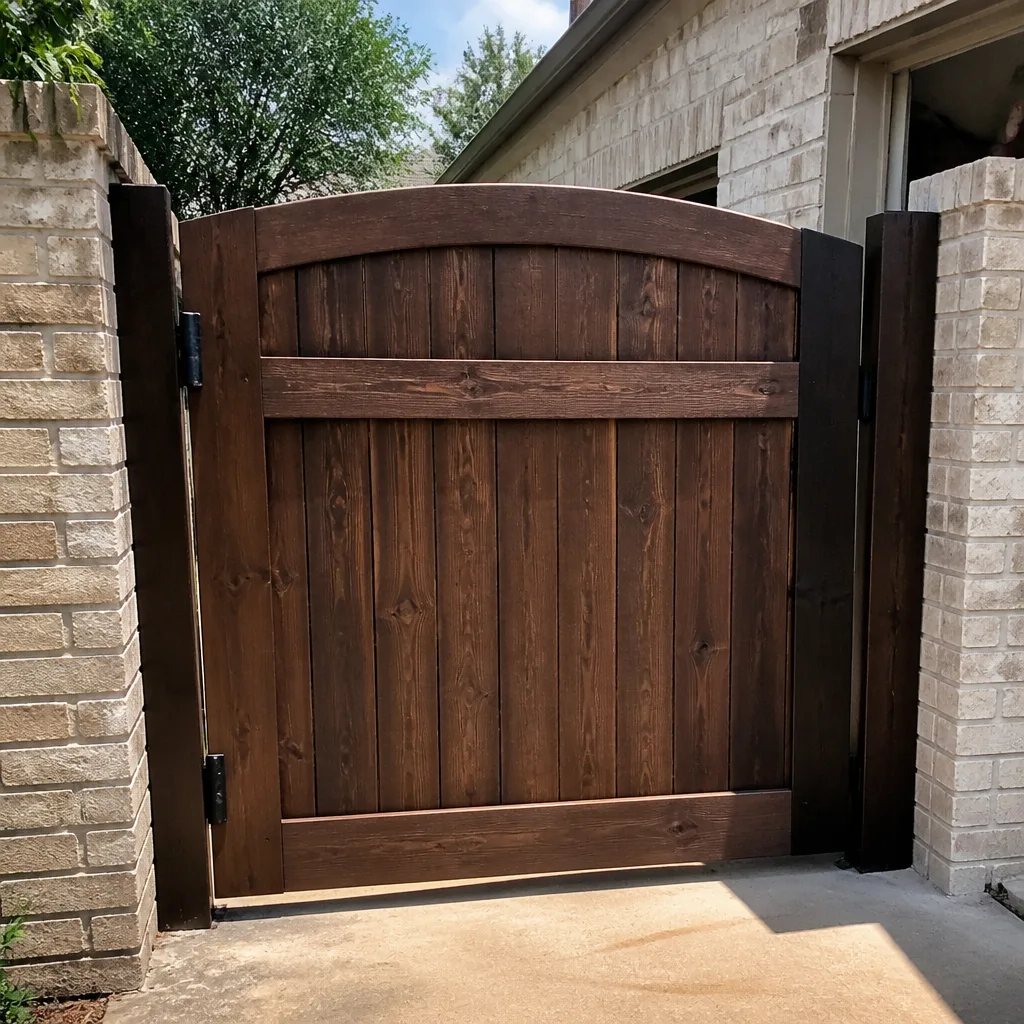 After
After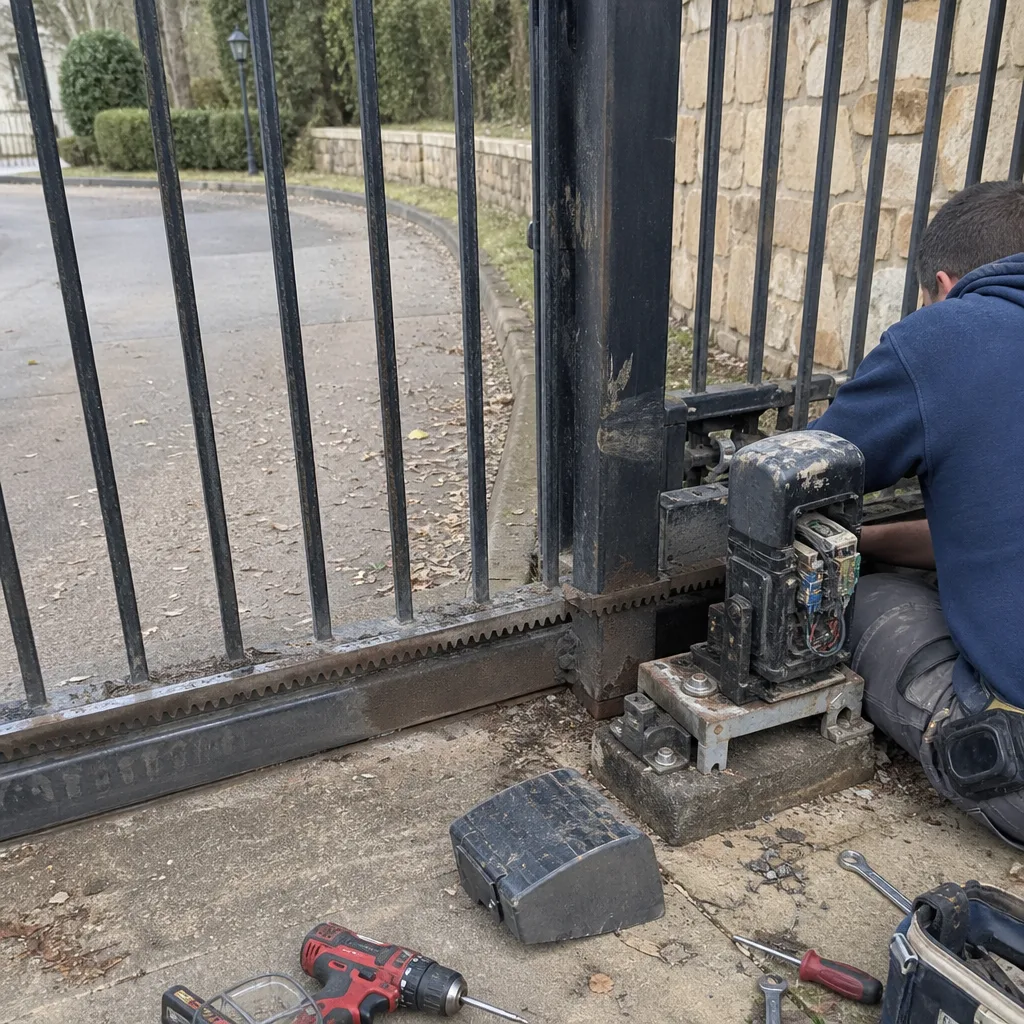 Before
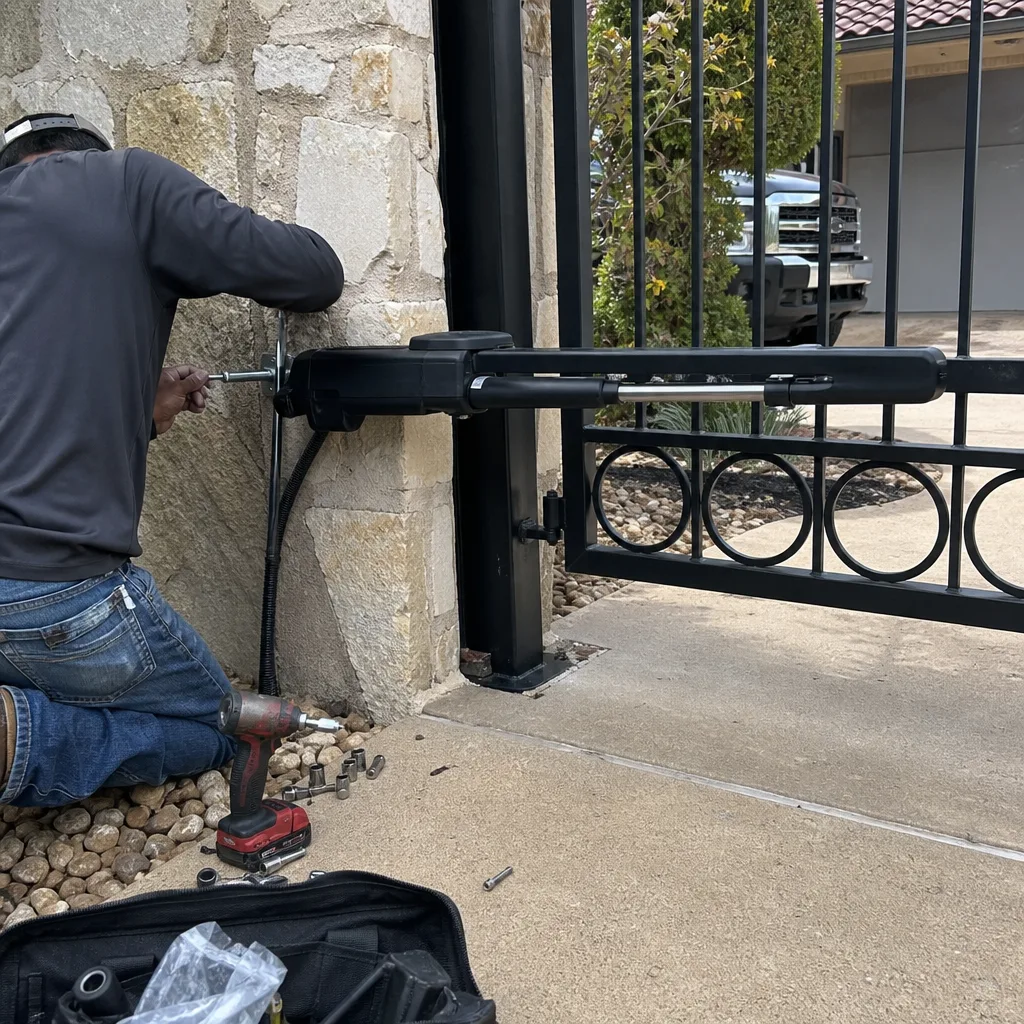 After
After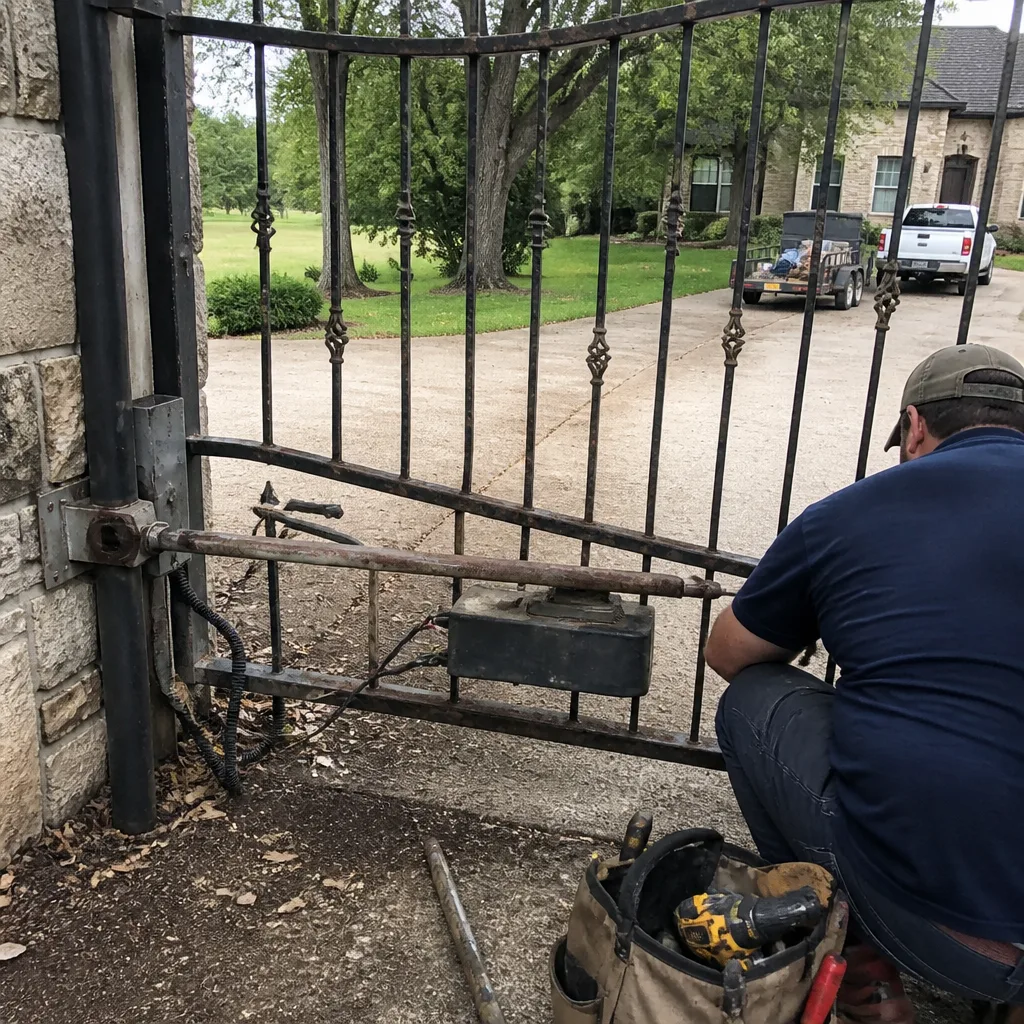 Before
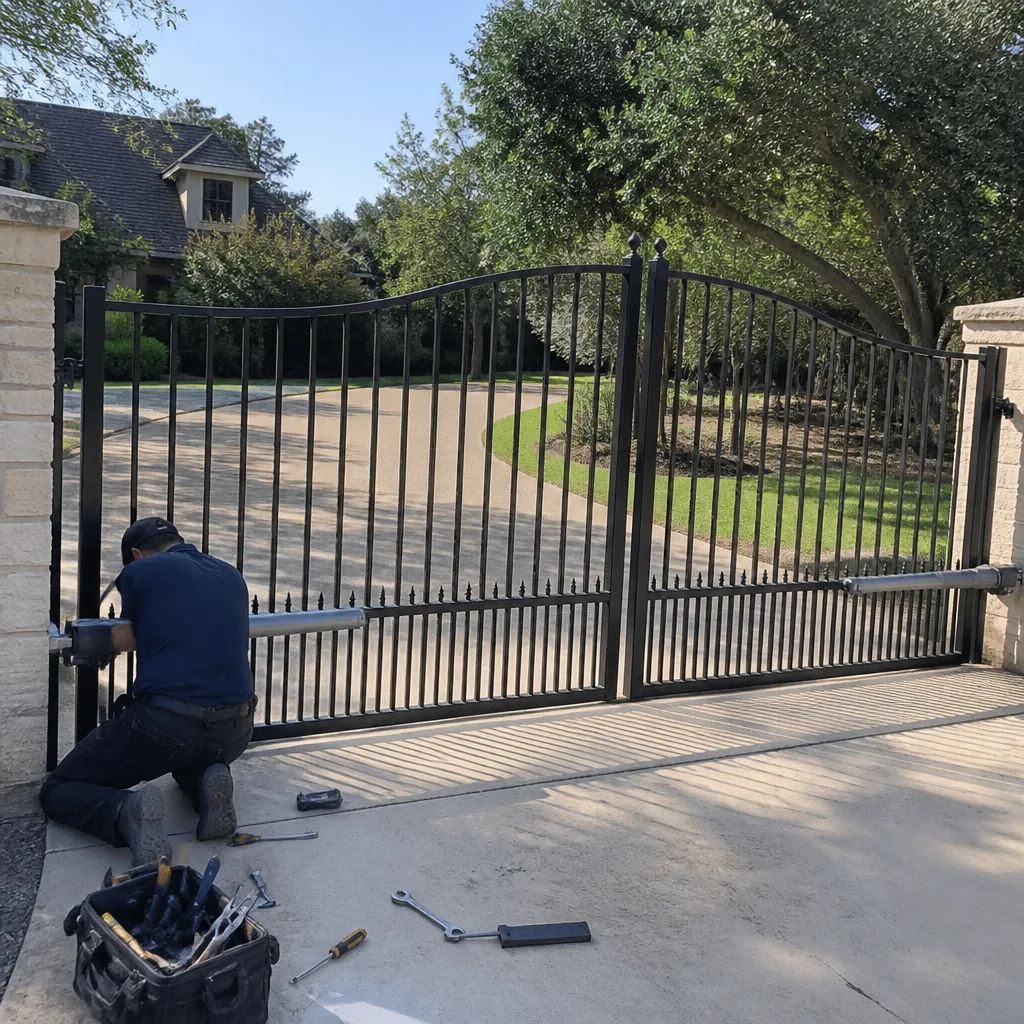 After
AfterGate Repair Permits, Codes & Inspections in TX: What You Need to Know
Most Colleyville homeowners are surprised to learn that Texas treats a driveway gate as a structure, not an accessory. That single classification changes everything about how the job gets done, what it costs, and whether the city can make you tear it out later. According to the Texas Department of Licensing and Regulation, an improperly permitted automatic gate is one of the most common code violations found during property sales in the Dallas-Fort Worth metro. This guide walks through exactly what Colleyville and surrounding Tarrant County cities require, where the real costs hide, and how to avoid paying for the same gate twice.
Quick Answer
In Texas, gate repair work generally does not require a permit, but new gate installations, most driveway gates on corner lots, and any gate that includes electrical or automation components often trigger permit and inspection requirements at the city level. In Colleyville specifically, a permit is required for new gate construction and for any electrical work tied to a gate opener, while simple hinge replacements, weld repairs, and operator swaps on existing permitted gates are classified as routine maintenance. The safest path is to call your city’s building department before the first post hole is dug, because the rules vary street by street, not just city by city.
Table of Contents
- Do You Need a Permit for Gate Repair in Texas?
- When a Permit Is Required in Colleyville
- Texas Codes That Govern Gates and Automation
- How the Inspection Process Works
- Setbacks, Easements, and Property Lines
- What Permits and Inspections Actually Cost
- HOA Rules vs. City Codes: Which One Wins?
- Common Mistakes to Avoid
- When to Call a Professional
- Frequently Asked Questions
- The Bottom Line
Do You Need a Permit for Gate Repair in Texas?
The short answer is no, not for the repair work itself. Texas does not have a statewide gate repair permit. What it has is a patchwork of municipal codes, and each city decides what counts as repair versus new construction. In Colleyville, replacing a bent hinge, welding a cracked frame, or swapping a failed LiftMaster operator on an existing gate is treated as maintenance. No permit, no inspection, done the same day.
But the line between repair and new construction is where homeowners get into trouble. If the repair changes the gate’s footprint, height, or electrical load, most Tarrant County building departments reclassify it as an alteration, and alterations follow the same rules as new installations. A gate that grows from four feet to six feet tall is an alteration. A gate that moves from a manual swing to a motorized slide is an alteration. A gate that gets a new keypad wired into a new conduit run is an alteration.
The Repair vs. Alteration Test
- Repair: Replacing a broken hinge, welding a crack in an existing frame, replacing an opener motor with a like-for-like unit, swapping a damaged keypad.
- Alteration: Changing gate height or width, moving the gate post location, converting manual to automatic, adding a new vehicle loop detector, running new electrical service.
- New installation: Any gate that did not exist before, regardless of size or automation.
The distinction matters because Colleyville, like most DFW suburbs, does not waive permitting for unpermitted work. If you sell the house later and the buyer’s inspector finds an unpermitted gate alteration, the title company can require correction before closing. We’ve seen that happen twice in the past three years in the McPherson Park area alone, and it’s never a cheap fix at that point.
In our experience at Ironworks Gate Co. home, most Colleyville gate repairs are straightforward maintenance jobs. The confusion starts when a homeowner thinks they’re just “fixing” a gate but the fix involves moving a post or changing the gate’s geometry. That’s when the permit conversation has to happen before the welding starts.
When a Permit Is Required in Colleyville
Colleyville’s building permit requirement for gates hangs on two triggers: new construction and electrical work. The city follows the 2021 International Residential Code with local amendments, and gates fall under the fence and accessory structure provisions. A new driveway gate attached to fence lines or freestanding posts requires a building permit. That’s non-negotiable whether the gate is welded steel or powder-coated aluminum.
Any gate automation component that requires a new electrical circuit triggers an electrical permit. If you’re extending power from the house to the gate for the first time, that’s an electrical permit. If you’re replacing an existing opener that plugs into an existing outlet, that’s repair work, no permit. If you’re adding a solar-powered opener with no hard-wired connection, most Colleyville inspectors treat it the same as a battery swap, which is to say, they don’t care.
Situations That Require a Colleyville Permit
- Any new gate installation, motorized or manual.
- Any gate alteration that changes the footprint, height, or post locations.
- Any new electrical circuit run to power a gate opener, keypad, or loop detector.
- Any gate on a corner lot that affects the sight triangle at the street intersection.
- Any gate that will be installed within a recorded easement, regardless of whether the HOA allows it.
The corner lot rule catches more Colleyville homeowners than any other. The city enforces sight-triangle setbacks more aggressively than most Tarrant County suburbs because Colleyville has so many winding collector streets with mature live oaks and crepe myrtles blocking sightlines. A solid steel gate that blocks a driver’s view of oncoming traffic is a liability the city won’t sign off on.
We advise every homeowner to call the Colleyville Building Inspections Department before committing to a gate design. The staff there is direct and helpful, and a five-minute call can prevent a $400 permit correction later. Tell them the address, the gate type, whether it’s motorized, and whether it’s on a corner lot. They’ll tell you exactly what’s needed.
Texas Codes That Govern Gates and Automation
Texas does not publish a standalone gate code. What governs automatic gates here is a stack of national standards adopted by reference into local ordinances, plus a few state-level statutes that apply to specific situations. If you want to know whether a gate installation is actually code-compliant, you check three things: the UL 325 standard for gate operator safety, the National Electrical Code for wiring, and your city’s adopted building code for structure and setback.
UL 325: The Gate Operator Safety Standard
UL 325 is the standard every automatic gate operator sold in the United States must meet. It mandates that every motorized gate include two independent means of entrapment protection. That usually means a combination of obstruction sensors, contact edges, or an inherent entrapment sensor built into the operator. Colleyville inspectors check for UL 325 compliance on every permitted gate installation, and they will fail a gate that has a new operator but no photoelectric sensors across the opening.
The brands we service most often in Colleyville, including LiftMaster, DoorKing, and Elite, all build UL 325 compliance into their current operator lines. But compliance only holds if the installer wires the safety devices correctly. A DoorKing operator with a disconnected photo eye is not a compliant gate, no matter what the box says. That’s a distinction we make on service calls several times a month.
NEC Article 300 and 430: The Electrical Side
Any hard-wired gate operator falls under the National Electrical Code. The relevant provisions cover burial depth for conduit, weatherproof enclosures, grounding, and circuit protection. Colleyville requires underground conduit to be buried at least 18 inches for most residential gate circuits, and the circuit must be GFCI-protected at the source. A handyman who runs Romex through a garden hose buried six inches deep has created a code violation and a real shock or fire hazard. We’ve had to correct more than one of those over the years.
Texas Property Code
Texas Property Code Chapter 202 covers restrictive covenants, and it’s the reason HOA gate rules carry legal weight in Texas. The state does not override private deed restrictions, so a gate that passes city inspection can still violate your HOA’s rules. That’s covered in the HOA section below, but the legal foundation is here: Texas law treats HOA covenants as enforceable contracts, not suggestions.
How the Inspection Process Works
Colleyville’s inspection process for a permitted gate installation typically runs in two phases: a rough inspection and a final inspection. The rough inspection happens after posts are set but before the gate is hung or any wiring is covered. The inspector checks post depth, concrete footings, and the conduit run if it’s visible. The final inspection happens after the gate is hung, the operator is installed, and all safety devices are operational.
The Typical Sequence
- Submit the permit application with a site plan showing the gate location and property lines.
- Wait for approval, which in Colleyville typically takes 3 to 7 business days for a standard residential gate.
- Set posts and run conduit before the gate is hung. Call for the rough inspection.
- Complete the gate installation, operator wiring, and safety device setup.
- Call for the final inspection. The inspector verifies UL 325 compliance, electrical work, and setback conformance.
- Receive the signed final inspection, which closes the permit.
A final inspection that fails is not the end of the world, but it does stop the job until the corrections are made. The most common failure points in Colleyville are missing photo eyes on slide gates, insufficient post depth for tall solid gates, and gates that swing outward over the sidewalk instead of inward onto the property.
We tell Colleyville homeowners to budget a week between rough and final inspection, not because the work takes that long but because scheduling inspections mid-job is part of the process. A gate job that gets rushed to avoid the inspection window is a gate job that gets red-tagged.
Setbacks, Easements, and Property Lines
Colleyville’s gate setback requirements mirror most Tarrant County suburbs but with a few local wrinkles. A driveway gate must sit at least three feet behind the back edge of the sidewalk, or five feet behind the curb if there’s no sidewalk. The gate cannot swing out over the public right-of-way. On corner lots, the gate must stay outside the 25-foot sight triangle measured from the intersection, and the city may require a shorter gate or a set-back position to preserve visibility.
Easements are the quiet complication. Many Colleyville neighborhoods, especially the older sections near Colleyville Boulevard and around the McPherson Park corridor, have utility easements that run along the front of the property. A gate post set inside a utility easement is a gate post that may need to be moved if the utility company ever needs to access the line. The city will not stop you from installing in some easements, but the utility can. We always recommend checking the survey before committing to post locations.
Colleyville-Specific Setback Notes
- Corner lots: The city enforces sight-triangle rules at every intersection, and gates are treated as site obstructions under Section 4.06 of the Colleyville Zoning Ordinance.
- Floodplain areas: Properties near Little Bear Creek and its tributaries may have additional restrictions on post footings and gate height under the city’s flood damage prevention ordinance.
- Masonry wall integration: Colleyville has many neighborhoods with masonry perimeter walls, and a gate integrated into a masonry column must match the wall’s setback, not the fence setback. That’s a common point of confusion.
In short, the gate location is not just a design decision. It’s a legal decision, and it’s one of the few parts of the job that can’t be fixed with a welder after the fact.
What Permits and Inspections Actually Cost
Colleyville’s permit fees for residential gate work are modest compared to the cost of correcting an unpermitted installation. A standard building permit for a new residential gate runs between $75 and $150 depending on the project valuation, and a separate electrical permit adds another $50 to $75. Inspection fees are typically included in the permit cost. The total paperwork cost for a permitted gate installation in Colleyville is usually under $250.
The real cost is time. A permit adds a week to the front of the job and a few days between rough and final inspection. That’s a small price for a closed permit, but it’s a price that drives some homeowners toward unpermitted work. We understand the temptation. We also know what a closed permit costs to fix when the title company catches it two years later, and it’s not $250. It’s often $1,000 or more in expedited fees, corrections, and re-inspection once you factor in the pressure of a closing date.
Typical Colleyville Gate Permit Costs
- Building permit for new gate: $75 to $150
- Electrical permit for new circuit: $50 to $75
- Total typical permit and inspection cost: $125 to $225
- Penalty for unpermitted work discovered at sale: $500 and up, plus corrections
These numbers are ballpark figures based on current Colleyville fee schedules and may change. The only way to get an exact number is to call the Building Inspections Department with your specific project details. We always quote permit costs separately from installation costs so there are no surprises on the bill, and we tell every customer what the permits will cost before the first post hole is dug. Upfront pricing is the only way we work, and that includes city fees.
HOA Rules vs. City Codes: Which One Wins?
Both. That’s the honest answer, and it’s the one most Colleyville homeowners don’t want to hear. The city enforces its codes through permitting and inspection. The HOA enforces its covenants through fines, liens, and in the worst case, legal action. Passing a city inspection does not satisfy an HOA that prohibits your gate’s height, color, or setback. And an HOA approval letter does not replace a city permit.
Colleyville has an unusually high concentration of HOA-governed neighborhoods, particularly in the newer developments east of Heritage Avenue and the established communities around McPherson Park and Pleasant Run Road. Many of these HOAs have architectural control committees that must approve any gate visible from the street before installation begins. The approval process usually takes 30 to 60 days, which catches homeowners off guard when they assumed the city permit was the only hurdle.
The Order of Operations
- Check HOA covenants for gate restrictions before hiring anyone.
- Submit the gate design to the HOA architectural committee and get written approval.
- Apply for the city permit with your HOA approval letter in hand.
- Install the gate to meet both the HOA’s design standards and the city’s code requirements.
- Pass the city inspection and keep both the inspection record and the HOA approval in your permanent home file.
We tell every Colleyville customer to start with the HOA, not the city. The HOA process is slower and more subjective. We’ve seen beautifully built gates torn out because the homeowner skipped the architectural committee and the committee had a grudge. The city doesn’t care what color your gate is. Some HOAs care a great deal.
Common Mistakes to Avoid
- Assuming gate repair never needs a permit. Most repairs don’t, but any change to post location, gate height, or electrical service can reclassify the job as an alteration. In Colleyville, that means a permit and an inspection. When in doubt, call the building department.
- Skipping the HOA approval because the city said yes. A city permit and an HOA violation are completely separate problems. We’ve worked in Colleyville neighborhoods where the HOA required a specific gate style and a specific color, and ignoring that cost the homeowner more than the permit ever would have.
- Burying electrical conduit too shallow. Colleyville follows NEC burial depth requirements, and an inspector will red-tag a circuit that’s six inches deep in a flower bed. The fix usually means tearing out the run and doing it again at the correct depth.
- Buying the gate before checking setback rules. A beautiful custom gate that’s 10 feet tall is an expensive mistake on a Colleyville corner lot where sight-triangle rules cap the height. Check the rules before you spend the money.
- Ignoring UL 325 compliance on a DIY opener install. A motorized gate without working entrapment protection is not just a failed inspection. It’s a genuine safety hazard. In a city with as many grandchildren and delivery drivers as Colleyville, that’s not a risk worth taking.
- Setting posts inside a utility easement. The city won’t always stop you, but the utility company can make you move the gate later, and they won’t pay for it. Pull the survey. Know where the easements are.
- Not keeping the permit paperwork after the job. When you sell the house, a buyer’s inspector will ask for proof the gate was permitted. A closed permit is worth real money at closing. Losing the paperwork is losing the proof.
When to Call a Professional
Any gate work that involves mains voltage, torsion springs, or structural welding is professional work in our book, and not because we’re trying to protect our trade. A gate that weighs 400 pounds and moves on a motor can injure someone badly if the safety devices aren’t wired correctly. A gate that falls off its hinges because the posts weren’t set deep enough can crush a car or worse. Texas law doesn’t stop a homeowner from doing their own gate work, but it also doesn’t protect them from the consequences of a bad install.
The situations that most clearly call for a licensed professional are new gate installations, any job that requires a permit, any job that involves new electrical service, and any repair where the gate’s structure itself has been compromised. If a post is leaning, a weld has split, or the gate is scraping the ground, the problem is usually deeper than the visible symptom.
Ironworks Gate Co. offers free estimates in Colleyville and the surrounding Tarrant County area, and we walk you through the permit and HOA process before any work begins. If you’re not sure whether your gate job needs a permit, call us at (817) 242-5426 and we’ll tell you straight, whether or not we get the job.
Frequently Asked Questions
No, replacing an existing gate opener with a like-for-like unit is considered maintenance and does not require a permit in Colleyville. This covers swapping a failed Ghost Controls opener for a new Ghost Controls unit, or replacing a DoorKing with a compatible DoorKing model. If you’re adding a new circuit or converting a manual gate to automatic, the electrical permit requirement kicks in. Call (817) 242-5426 if you’re unsure which category your job falls into.
Colleyville gate permits typically cost between $75 and $150 for the building permit and $50 to $75 for a separate electrical permit when new power is involved, for a total of roughly $125 to $225. Inspection fees are generally included in the permit cost. The exact number depends on your project’s valuation and scope, and the only way to know for sure is to check with Colleyville Building Inspections.
Texas law allows homeowners to perform work on their own property without a contractor’s license, including gate installation. However, the work must still meet code, pass inspection, and satisfy any HOA requirements. UL 325 compliance for automatic gates is not optional, and a self-installed Elite operator that lacks proper entrapment protection will fail a Colleyville inspection just as fast as a contractor’s would.
Colleyville generally permits driveway gates up to six feet in height in side and rear yards, with front-yard gates subject to sight-triangle and visibility rules that often limit them to four feet on corner lots. Gates integrated into masonry walls may be allowed at greater heights if the wall itself is code-compliant. Always confirm with the Building Inspections Department before purchasing a gate taller than six feet.
Yes, if your neighborhood has an HOA with architectural control provisions, which most Colleyville developments do. The HOA approval process is separate from the city permit process and often takes longer. You need both approvals, and neither substitutes for the other. Start with the HOA, because their rules are often more restrictive than the city’s.
Colleyville can issue a stop-work order, require the gate to be brought into compliance, and charge penalty fees that often exceed the original permit cost. The more painful consequence usually comes at sale time, when the unpermitted gate shows up on the buyer’s inspection and the title company requires correction before closing. The fix at that point is on your timeline, not yours a comfortable one.
The Bottom Line
Gate repair in Texas is usually permit-free, but the moment the job crosses into alteration or new installation, Colleyville’s rules apply, and they’re not forgiving. A permit costs a couple hundred dollars and a week of patience. Skipping it can cost thousands at closing and a gate that may not be legal to keep. Check the HOA first, check the city second, and check the survey before any post goes in the ground. If you’re not sure where to start, the team at Ironworks Gate Co. will walk you through all of it, free of charge, before any commitment. That’s how we’ve handled gate work in Colleyville for years, and it’s how we’ll keep handling it.
Written by Victor Salinas, Owner at Ironworks Gate Co., serving Colleyville since 2013.