
Last updated August 25, 2026
Free on-site gate assessment - hinges, posts, and your LiftMaster or Nice gate operator checked before anything is quoted
The assessment is free and the quote is the invoice.

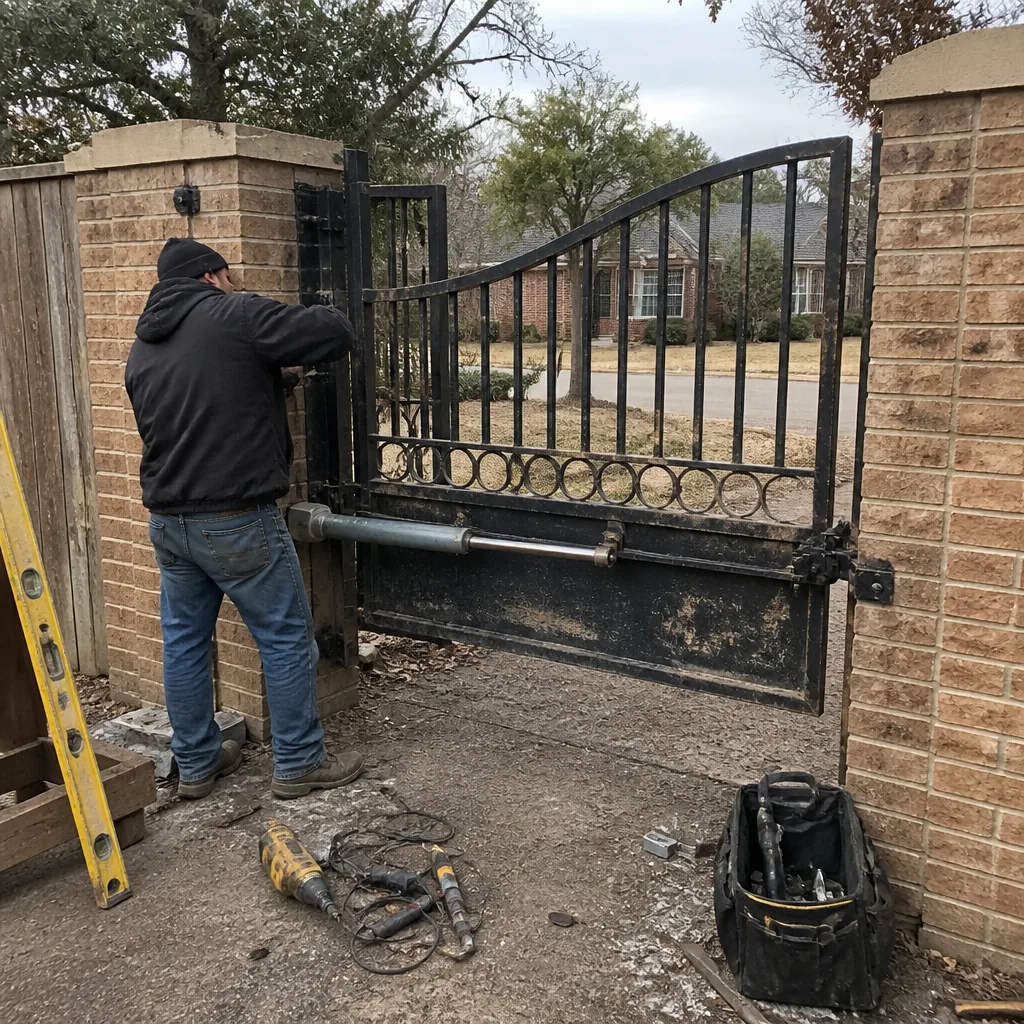 Before
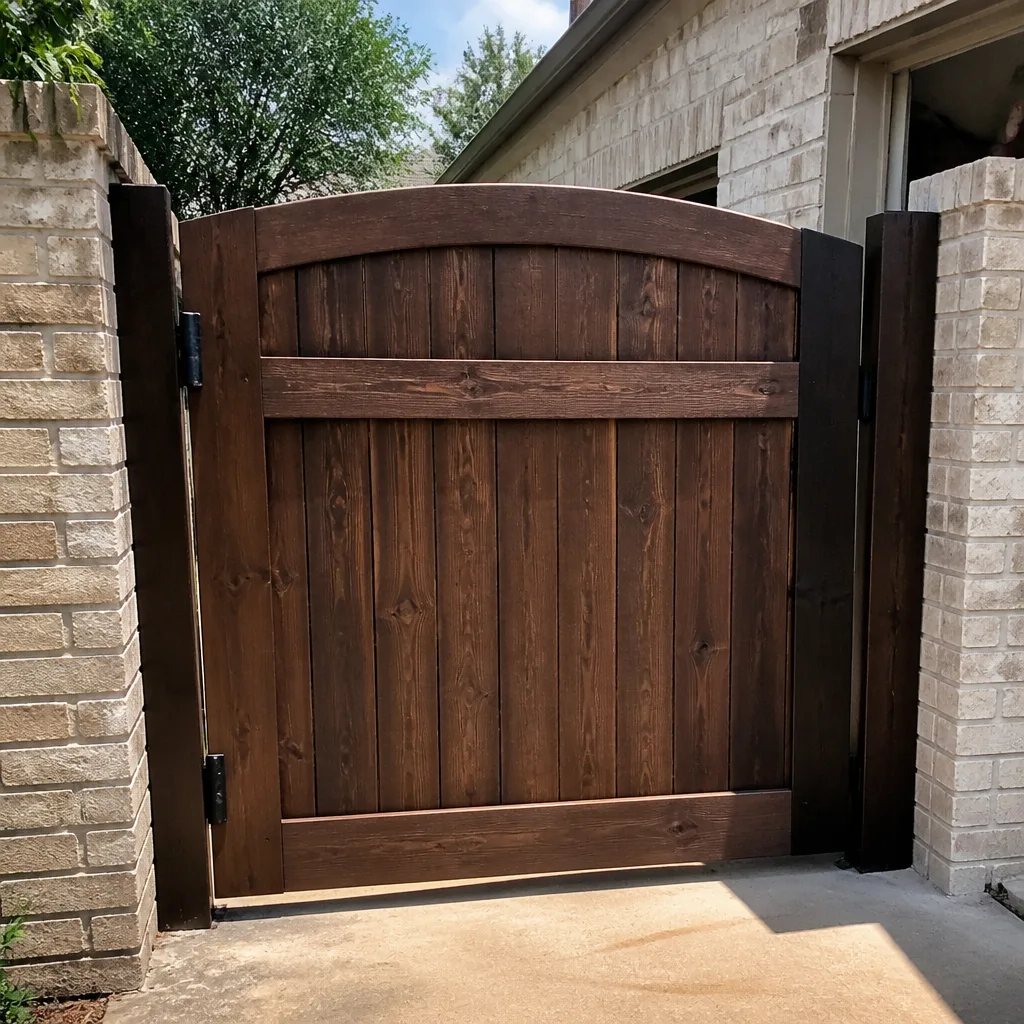 After
After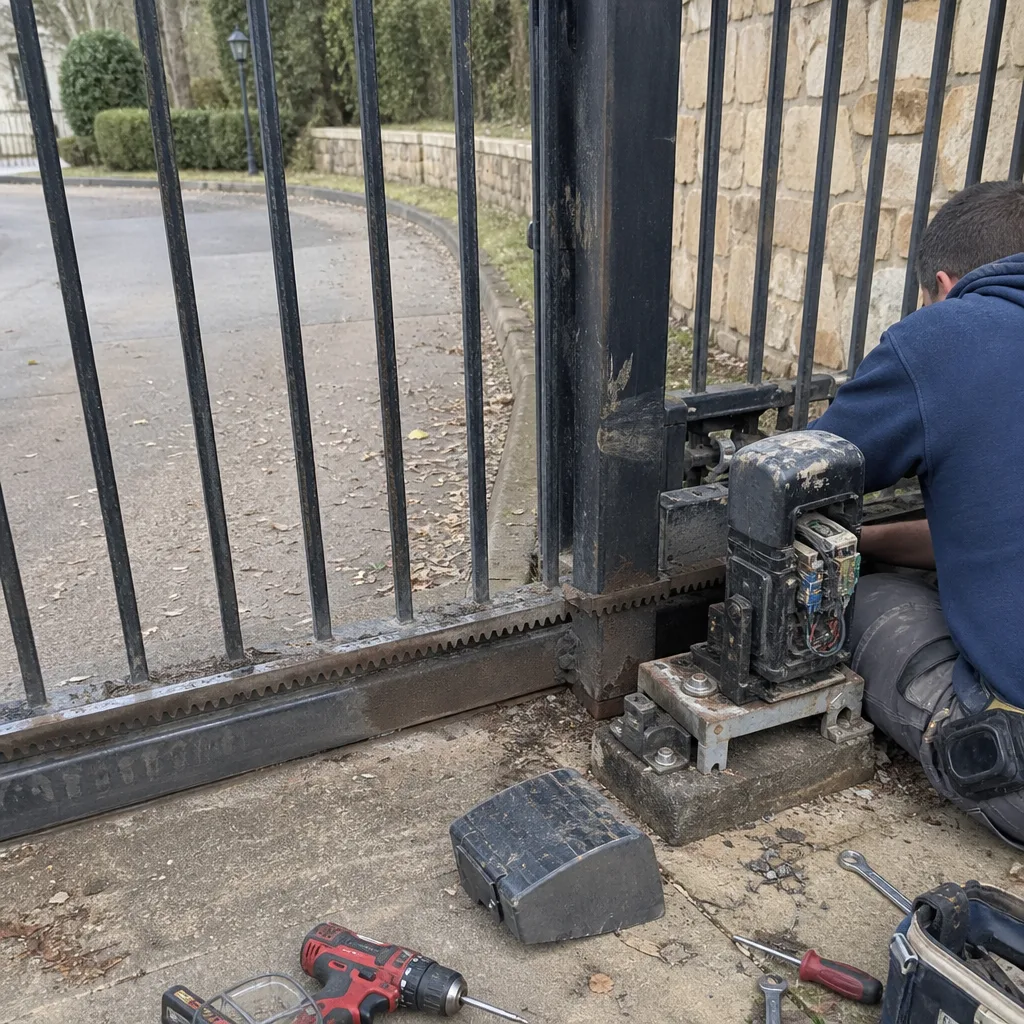 Before
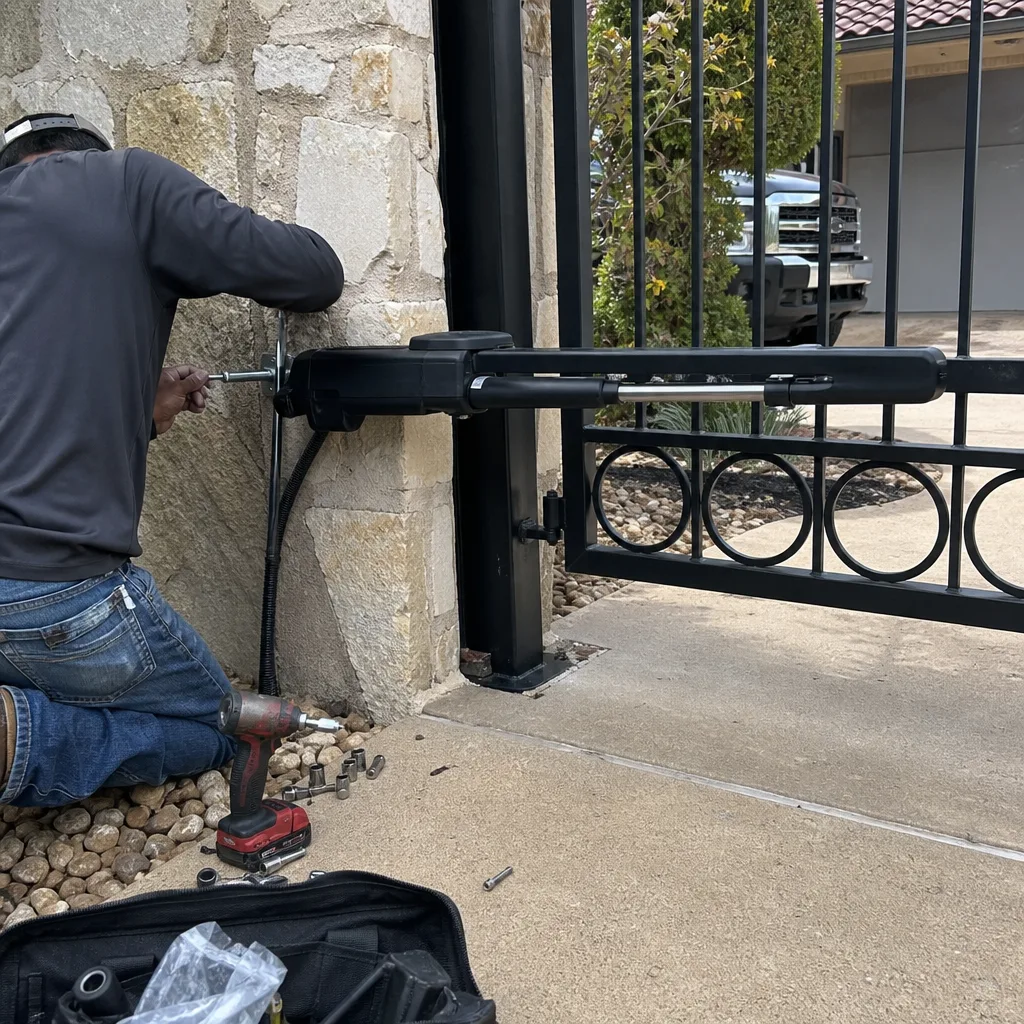 After
After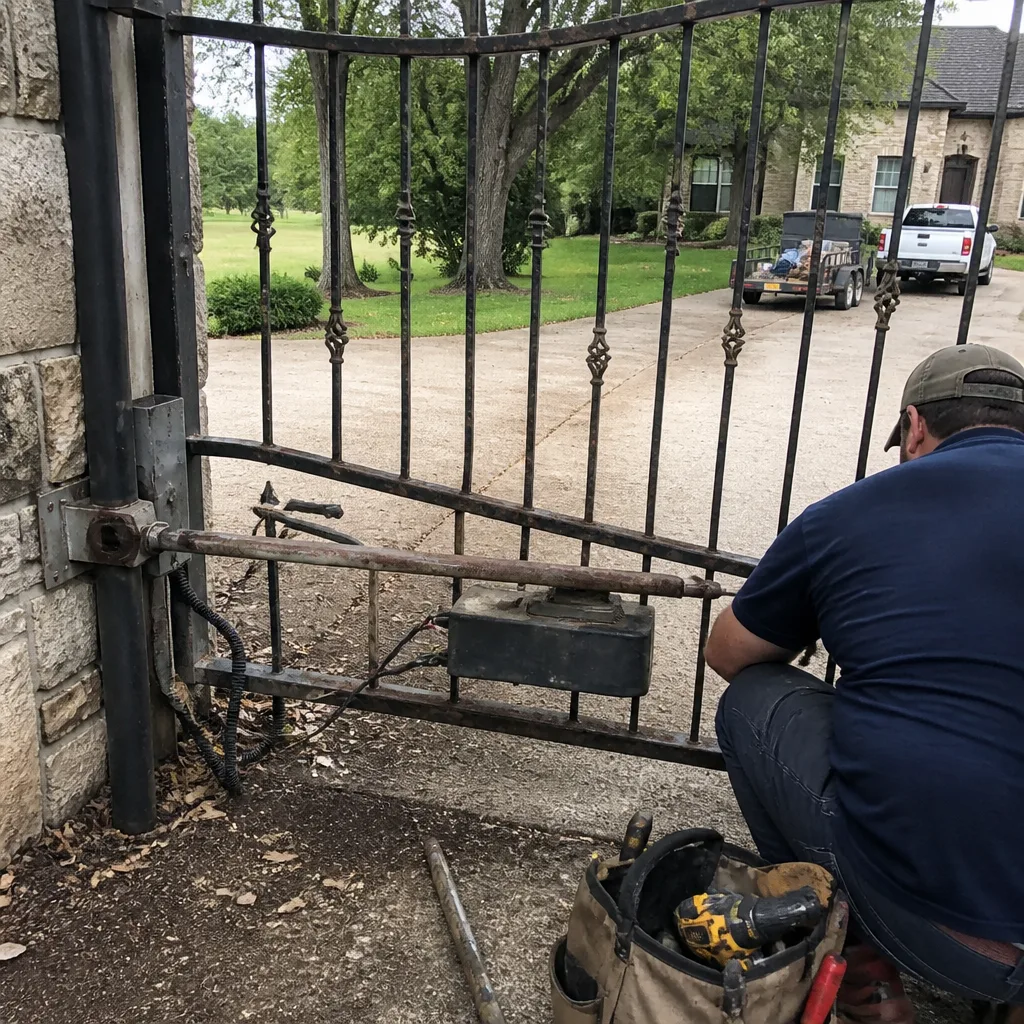 Before
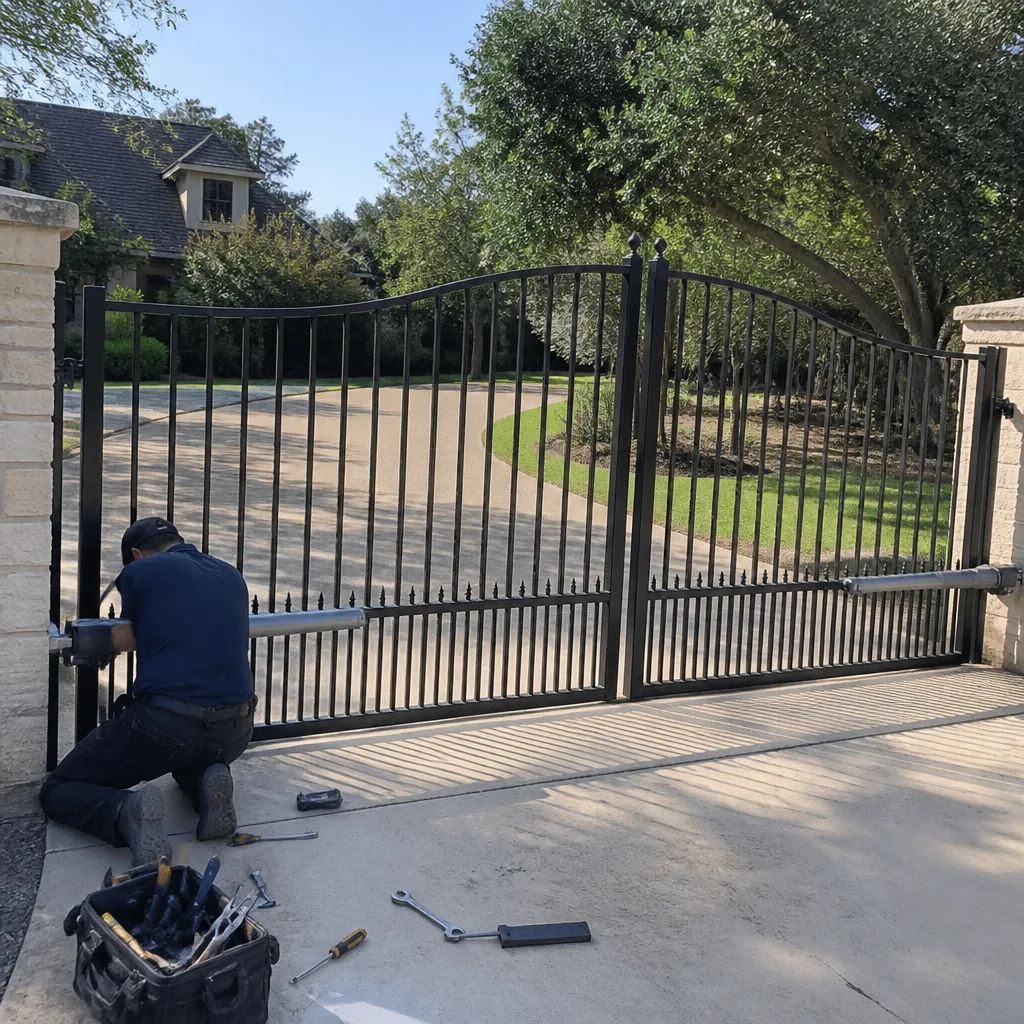 After
AfterGate Repair Warning Signs: A Colleyville Homeowner’s Reference Guide
Here is a number most Colleyville homeowners never expect to learn: a driveway gate that cycles just four times a day completes nearly 1,500 open-and-close operations every year. Each one of those cycles wears on hinges, stresses the motor, and flexes the welds. Most gate failures don’t happen suddenly. They announce themselves weeks or even months in advance, through small changes in sound, speed, and movement that get ignored until the morning the gate simply won’t open and the car is stuck in the driveway. This guide walks through every warning sign that matters, what each one means, what it costs to fix in the Colleyville market, and when a repair call now saves a full replacement later. By the end, you will know exactly what to watch for, what to ignore, and what to do about it.
Quick Answer
The earliest warning signs of a failing driveway gate in Colleyville are a gate that moves slower than it used to, a motor that hums or whines under load, hinges that sag or scrape, and a remote or keypad that works only intermittently. Any one of these is worth investigating within a week or two. Any two showing up together usually means a component is already failing and a repair call now will cost less than waiting for the full breakdown.
Table of Contents
- Warning Sign 1: New Sounds from the Gate or Motor
- Warning Sign 2: The Gate Moves Slower Than It Used To
- Warning Sign 3: Visible Sag, Scraping, or a Gate That No Longer Sits Level
- Warning Sign 4: Intermittent Operation from the Remote or Keypad
- Warning Sign 5: The Auto-Reverse Feature Stops Working
- Warning Sign 6: The Gate Opens on Its Own, Stops Mid-Cycle, or Trips the Breaker
- Warning Sign 7: Rust, Cracks, or Weld Fatigue on the Gate Frame
- What Gate Repairs Cost in Colleyville
- Common Mistakes to Avoid
- When to Call a Professional
- Frequently Asked Questions
- The Bottom Line
Warning Sign 1: New Sounds from the Gate or Motor
A healthy gate makes a predictable sound. The motor hums steadily, the wheels or rollers move quietly along the track, and the gate closes with a soft thud against the stop. When that sound changes, something has changed with it.
The most common sound complaints from Colleyville homeowners are a motor that whines or strains, a grinding or metallic scraping noise from the hinge side, and a slamming or rattling at the end of travel. Each one points to a different problem.
- A whining motor usually means the opener is working harder than it should. That extra load typically comes from dry or failing bearings in the hinge assembly, a gate that has settled out of alignment, or debris build-up in the track or on the wheels. It can also be the first sign of failing capacitor in the motor itself, especially on older DoorKing and Elite openers that have been in service for fifteen years or more.
- A grinding or scraping sound is almost always mechanical. The hinge pins or bearings are dry or worn, the gate is dragging on the ground, or the drive chain or belt is loose and catching. A scraping gate is the metal itself being worn away. Given enough time, the scrape becomes a structural problem because the bottom rail of the gate gets thinner every cycle.
- A slam or bang at the end of travel means the limit switches or the physical stops have moved or failed. The gate no longer knows when to stop pushing. That repeated impact is transferred straight into the hinge welds and the operator mounting bracket. Every slam shortens the life of the entire system.
One note from years of service calls: sounds that stop on their own are not fixed. If the gate whined for three weeks and then went quiet, the component that was making noise has often failed completely. The quiet is the problem. A gate that changes its sound, even back to normal, deserves a look.
Warning Sign 2: The Gate Moves Slower Than It Used To
A properly maintained gate operator should move the gate at a consistent speed from fully open to fully closed, summer and winter. Speed changes are one of the most reliable early indicators of trouble because the motor is telling you something through the way it works.
In our experience with Colleyville properties, slow gate movement falls into one of four categories:
- Slow in one direction only typically points to a mechanical issue on one side of the travel. A wheel that binds, a hinge that has stiffened, or a section of track that has shifted. One-directional slowness is rarely the motor itself.
- Slow in both directions often indicates the opener is underpowered for the gate it is driving, or the operator’s internal gears are worn. We see this most often when a heavier gate has been installed on an opener rated for a lighter load, or when an original gate was modified over the years with added cladding, decorative elements, or a solid infill panel.
- Slow when cold is a hydraulic or grease issue. Colleyville winters rarely freeze hard, but the temperature swings between December mornings in the 30s and July afternoons above 100 degrees are enough to thicken old grease and strain older hydraulic operators. A gate that moves slowly on a cold morning and fine by noon needs fresh lubrication at minimum, and possibly a hydraulic fluid service on operators that use it.
- Gradually slower over months is the classic sign of a motor and gearbox wearing out. The operator is working as hard as it can and losing capacity a fraction at a time. By the time a homeowner notices, the unit has usually been failing for a while and is close to full failure.
The practical takeaway: you know your gate. You see it cycle every day. If it takes noticeably longer to open or close than it did a year ago, it is not your imagination. That is the leading edge of a repair problem.
Warning Sign 3: Visible Sag, Scraping, or a Gate That No Longer Sits Level
Wrought iron and steel gates are heavy. A single driveway gate leaf in a Colleyville estate home often weighs 300 to 600 pounds, and a double-leaf entry gate can carry a combined load over half a ton. That weight is supported by hinges, and the hinges are anchored to posts set in concrete. Everything in that chain is aging.
The most obvious visual sign of trouble is the gate leaf that no longer sits level. Stand at the end of the driveway and look at the gap between the bottom of the gate and the ground. If the gap tapers from wide at the hinge side to narrow or touching at the latch side, the gate has sagged. That sag means the hinge bearings are worn, the post has shifted, or the original welds holding the hinge to the post are fatiguing.
In Colleyville specifically, the expansive clay soil adds a variable that homeowners in other parts of the country don’t face. Our soil absorbs winter moisture and dries out in the summer heat, which causes the ground to expand and contract. Gate posts set in concrete are usually stable, but fence-line posts and the track the gate rides on can move seasonally. A gate that scrapes in August but not in March may be sitting on ground that has shifted under the wheel path. That does not make the scraping harmless. It just means the fix is different: shimming or resetting the track versus replacing hinges.
What to check, without touching the gate:
- The gap at the top and bottom of both leaves, comparing hinge side to latch side
- The distance between the two leaves at the center when closed
- Whether the gate touches the ground or scrapes a wear pattern into the driveway surface
- Whether the post itself leans, even slightly, when viewed from the street
Any visible sag means load is no longer being carried the way the design intended. The hinge, the post, or the weld is giving up a little more every week.
Warning Sign 4: Intermittent Operation from the Remote or Keypad
There is a particular pattern to intermittent gate electronics that every Colleyville homeowner should know. When the remote works sometimes and not others, it is rarely the remote. And when the keypad works sometimes and not others, it is rarely the keypad.
Intermittent operation usually falls into one of these causes:
- Receiver sensitivity fade: The radio receiver inside the gate operator weakens with age. The remote still transmits at full power, but the receiver can no longer hear it from the same distance. The classic symptom is a remote that works when you are ten feet from the gate but not from the street, or works only after two or three button presses.
- Interference: Colleyville’s newer developments and the rapid build-out of wireless infrastructure around the DFW area have introduced more radio traffic on frequencies that older operators use. A gate that worked reliably for fifteen years can become erratic when new wireless devices, a neighbor’s system, or a new LED transformer nearby starts broadcasting on a nearby frequency.
- Control board failure: The circuit board inside the operator is an electronic component with a finite service life. Heat is the enemy, and in a metal enclosure in a Texas summer, internal temperatures can exceed 140 degrees even when the outside air is in the 90s. Boards on Ghost Controls, Mighty Mule, and older LiftMaster units all eventually develop solder joint cracks or capacitor failure that presents as intermittent operation.
- Keypad wiring or contact wear: Keypads live outdoors and take direct sun. The membrane or the individual buttons wear, and the wiring between the keypad and the control board corrodes over time. A keypad that works reliably for three months of the year and then starts dropping entries usually has a connection problem, not a programming issue.
The common homeowner response to an intermittent remote is to buy a new remote and replace the battery. That fixes the problem about one time in four. The other three times, the receiver or the board is the issue, and the intermittent behavior returns within weeks. When we get a call about intermittent operation, we test the receiver sensitivity first. It is the fastest diagnostic in the trade and the one most often skipped.
Warning Sign 5: The Auto-Reverse Feature Stops Working
This is the one warning sign that overrides every other item on this list. If the gate no longer reverses when it encounters an obstruction, stop using the automatic opener immediately and operate the gate manually until it is repaired.
Automatic gate openers sold in the United States are required to include an entrapment protection system, typically a reverse on contact mechanism, a photo eye, or both. That system is what keeps a closing gate from pinning a child, a pet, or an adult against the post. It is a safety device, not a convenience feature. When it fails, the gate is dangerous.
The test is simple and every homeowner should run it once a month. Open the gate, then trigger a close cycle. As the gate is closing, place a soft object like a cardboard box or a trash can in its path. The gate should stop and reverse within a second or two of contact. If it keeps pushing, the auto-reverse has failed.
Common causes we find on Colleyville service calls:
- Misaligned photo eye sensors, usually from the post shifting seasonally
- A failed pressure sensing or current sensing module inside the operator
- The force limit set too high after a previous repair, typically from a handyman who adjusted the opener to “push through” a sticking gate instead of fixing the mechanical cause of the drag
- Worn motor brushes that no longer provide the fine control the reverse circuit requires
A gate with a failed auto-reverse is one of the few repair situations we recommend treating as urgent. It is not a question of convenience. It is a question of safety for anyone who walks or drives through that opening every day.
Warning Sign 6: The Gate Opens on Its Own, Stops Mid-Cycle, or Trips the Breaker
Electrical behavior in a gate system falls into patterns, and each pattern means something specific. Colleyville homeowners call us with three electrical complaints more than any others: the gate opens on its own, the gate stops halfway and sits there, or the gate trips the household breaker.
Opening on its own is almost always signal interference or a failing control board receiving a false open command. Older operators using the 300 MHz and 318 MHz frequency bands are particularly susceptible. A nearby ham radio operator, a new wireless security system, or even another gate opener in the neighborhood on a similar code can trigger a false open. The fix may be as simple as changing the receiver code or adding a frequency filter, or as involved as replacing the control board or receiver.
Stopping mid-cycle is usually one of three causes: the safety photo eye is being tripped by a shadow, a leaf, or a misalignment; the motor is overheating and its internal thermal protection is shutting it down mid-travel; or the limit switches are failing and telling the board the gate has reached its end of travel when it is only halfway there. The third cause is the most common on openers that are ten or more years old and the one most often misdiagnosed as a motor failure.
Tripping the breaker is a serious warning. A gate operator draws modest current during normal operation, under 10 amps on a dedicated circuit. If the breaker trips, something has failed in a way that is causing a direct short or a large inrush current. The usual suspects are a seized motor, water ingress into the operator housing or the junction box, or a damaged wire run between the house and the gate. Continuing to reset the breaker and run the gate risks further damage to the motor windings and the control board.
One piece of hard-won advice: never ignore the breaker trip more than twice. The first trip could be a fluke. The second trip is the system telling you something has failed. The third trip often costs two or three times the repair because the fault has taken out additional components.
Warning Sign 7: Rust, Cracks, or Weld Fatigue on the Gate Frame
Steel is strong, but steel in North Texas weather is in a constant low-grade battle with moisture. Colleyville gets roughly 38 inches of rain a year, and the humidity from spring through early fall keeps metal surfaces in contact with a thin film of moisture for long stretches. Powder coating and paint protect the surface. The moment that protective layer is breached, corrosion begins.
Rust on a gate is not cosmetic. Rusting is the chemical process of the metal converting to iron oxide, which is weaker, expands, and flakes away. A rusting bottom rail is literally a thinning bottom rail. What begins as a small bubble under the finish becomes a patch of scale, then a hole, then a structural failure.
What to look for on your own gate:
- Blistered paint or powder coat: Small raised bumps mean rust is forming underneath the finish. The metal is already corroding even though the surface hasn’t broken through yet.
- Rust streak lines: Orange or brown staining running down from a joint, a weld, or a decorative element means water is inside the tube or the joint and working its way out. This is especially common on hollow steel pickets that fill with rainwater.
- Cracks at the welds: Gate welds endure cyclic loading, flexing slightly with every open and close. Over decades, that repeated flexing causes fatigue cracks at the weld toes, particularly where the hinge plate meets the frame and where diagonal bracing connects to the corners. A crack that is two inches long today will be four inches long after a few more months of cycles.
- Loose decorative elements: Scrollwork, finials, and infill panels that rattle or move when the gate cycles mean the attachment welds are fatiguing. The decorative piece will eventually fall off, and the remaining open weld is a starting point for corrosion.
Weld repair on a gate is within the scope of a skilled technician with a mobile welding setup. It is not a handyman job. The repair requires knowing the original material type and thickness, matching the filler rod, and making a repair weld that is as strong as the parent metal. Done properly, a weld repair at the first sign of fatigue gives the gate another decade or more of service. Done poorly, the gate fails at the same spot within a year.
What Gate Repairs Cost in Colleyville
Repair pricing in the Colleyville market is consistent enough to give homeowners a practical range. These figures reflect what we see on service calls across the area, from the established custom-home streets off Pleasant Run Road to the newer developments on the north side toward Southlake.
Typical Repair Price Ranges
- Hinge replacement per leaf: $220 to $440, depending on gate weight and hinge type. Heavy ball-bearing hinges on a full-size driveway gate run at the upper end.
- Weld repair, single crack or joint: $150 to $350, assuming the area can be accessed and prepped on site.
- Track adjustment or re-setting: $180 to $380, depending on the length of the run and whether the track needs re-anchoring.
- Control board replacement: $350 to $750, with the part cost varying by brand. Older DoorKing and Elite boards occupy the upper range; Ghost Controls and Mighty Mule boards are typically lower.
- Receiver or remote system diagnosis and repair: $150 to $400, including new remotes if needed.
- Operator replacement (motor and gearbox): $850 to $2,200 installed, depending on the brand, the gate weight, and whether the existing mounting can be reused.
- Full hinge set, both leaves, heavy-duty replacement: $600 to $1,200, including realignment of both leaves.
- Safety sensor (photo eye) replacement: $180 to $320 per pair, including alignment and testing.
These are the prices homeowners should expect from a licensed, insured gate specialist in Colleyville. Handyman pricing runs lower, but the repair does not carry the same warranty and the diagnosis is often wrong the first time. When we replace a component, the price is agreed before the work starts, and the work carries our written 90-Day Done Right Promise. A repair that fails within that window is corrected without additional cost, no arguing and no paperwork.
One more pricing note, because homeowners ask it constantly: the second-most expensive gate repair is the first repair done wrong. The most expensive is the full replacement that becomes necessary because the first repair was deferred for two years while the damage spread. Early intervention on a single warning sign is the cheapest version of every gate repair.
Common Mistakes to Avoid
- Lubricating the wrong parts with the wrong product: Hinge bearings need a light machine oil or a quality spray lubricant, not WD-40 or axle grease. Grease attracts dirt and makes the problem worse. Lubricating a track or wheel that is already misaligned masks the symptom for a few weeks while the underlying wear continues.
- Adjusting the force or sensitivity settings higher: When a gate starts sticking, a common response is to increase the force limit so the opener “pushes through” it. That works for a while and then the gate stops closing at all, because the motor has been running hot against a mechanical problem that is getting worse. It also defeats the auto-reverse safety feature, which creates a genuinely dangerous entrapment risk.
- Ignoring a sagging gate because “it still works”: Sag is load being transferred to the wrong places. A gate that sags an inch today puts lateral pressure on the hinge bearings and the operator. A year later, that inch is three inches and the repair bill has tripled.
- Replacing the opener when the problem is the hinge: A strained, whining motor is frequently working against a mechanical problem. Replacing the motor without addressing the hinge, wheel, or track means the new motor starts failing the same way the old one did, often within a year.
- Power-washing the gate and operator enclosure: High-pressure water forces its way past seals and into the operator housing, the control board, and the junction boxes. A gate that worked fine until the day it was power-washed and then started tripping breakers has water in the electronics. Wash the gate with a garden hose and a soft brush, and keep the operator enclosure dry.
- Waiting for the gate to fail completely before calling: Complete failure is the most expensive time to call. Emergency replacement work, same-day motor sourcing, and possibly a gate that is stuck open or closed all add urgency charges and limit the repair options. The homeowner who calls at the first warning sign has time, choices, and a smaller invoice.
When to Call a Professional
Some gate work is genuinely preventable maintenance that a careful homeowner can handle: clearing debris from the track, trimming vegetation away from the photo eye, and keeping hinges lightly lubricated. Other work should never be attempted without training.
Call a professional when the gate has visible sag or scraping, when the motor makes any sound that wasn’t there before, when the auto-reverse fails, when the breaker trips, or when the remote and keypad become unreliable. These are all symptoms of mechanical or electrical problems that require diagnosis before repair. A gate operator contains high-tension components, mains-voltage wiring, and a moving gate leaf that weighs hundreds of pounds. The combination is unforgiving of guesswork. Ironworks Gate Co. offers free estimates in Colleyville. Call (817) 242-5426 and a live person answers, any hour of the day.
If you are in the earlier stages of considering work on your gate, our Ironworks Gate Co. home page outlines the full scope of services, from hinge repair and welding to full automation replacement on nine major opener brands.
Frequently Asked Questions
Most gate repairs in Colleyville fall between $180 and $750, depending on what has failed. Hinge replacement runs $220 to $440 per leaf, weld repairs run $150 to $350 per joint, and control board replacement runs $350 to $750. A full operator replacement runs $850 to $2,200 installed. The price is always quoted and agreed before any work starts. Call (817) 242-5426 for a free estimate.
A gate that opens on its own is receiving a false open command, usually from radio interference, a failing receiver, or a control board that is shorting an input. In Colleyville, the increasing density of wireless devices in newer neighborhoods has made interference more common on older 300 MHz openers. The fix starts with a diagnosis of the receiver and board, and often costs under $400.
Yes, in most cases. A sagging gate is repaired by replacing the worn hinge bearings or the full hinge, re-welding fatigued joints, and realigning the gate on its posts. Full gate replacement is only necessary when the frame itself is rusted through or multiple structural members have failed. Most sagging gates in Colleyville are repairable in a single visit.
A quality gate opener that is properly maintained should last 12 to 18 years in the Colleyville climate. The heat is the limiting factor: electronics and motors degrade faster in Texas summers than they do in cooler regions. Openers that are run against a sticking gate or a sagging hinge fail significantly earlier, often in 6 to 8 years, because the motor is working under load every cycle.
We service nine major gate automation brands: LiftMaster, FAAC, BFT, Linear, Viking, Ghost Controls, DoorKing, Elite, and Mighty Mule. If your opener came from a builder, a previous owner, or another gate company, we can diagnose and repair it. Call (817) 242-5426 and we will tell you over the phone whether your brand is one we service.
No. A gate without a functioning auto-reverse is an entrapment hazard. Stop using the automatic opener immediately and operate the gate manually until the safety system is repaired. This is a repair we treat as urgent, and we will dispatch a technician to Colleyville the same day when the auto-reverse has failed.
The Bottom Line
A driveway gate is a mechanical system under load, exposed to Texas weather, cycling thousands of times a year. It talks. The warning signs are specific and knowable: a new sound, a slower cycle, a visible sag, an intermittent remote, a failed auto-reverse, an opening that happens on its own, a patch of rust at a weld. Each one means something, and each one is cheaper to address the week it first appears than the month the gate finally stops. Watch for the signs, act early, and when in doubt, get a professional diagnosis before the small repair becomes a full replacement. That is the entire value of a gate specialist: the correct diagnosis the first time, the right repair done once, and a written promise behind it. Victor Salinas and the Ironworks Gate Co. team have been doing exactly that work in Colleyville for years, and we plan to be doing it for decades more.
Written by Victor Salinas, Owner at Ironworks Gate Co., serving Colleyville since 2013.