
Last updated August 25, 2026
Free on-site gate assessment - hinges, posts, and your LiftMaster or Nice gate operator checked before anything is quoted
The assessment is free and the quote is the invoice.


 Before
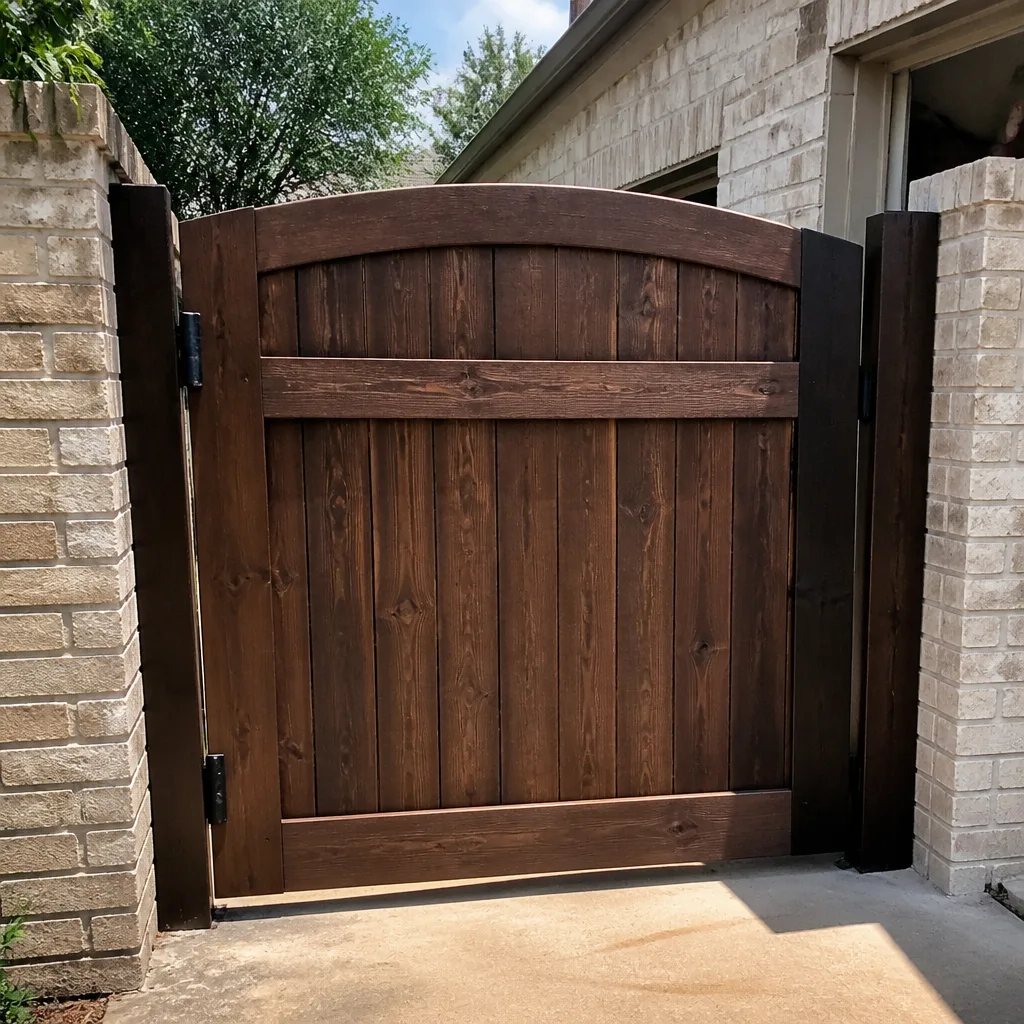 After
After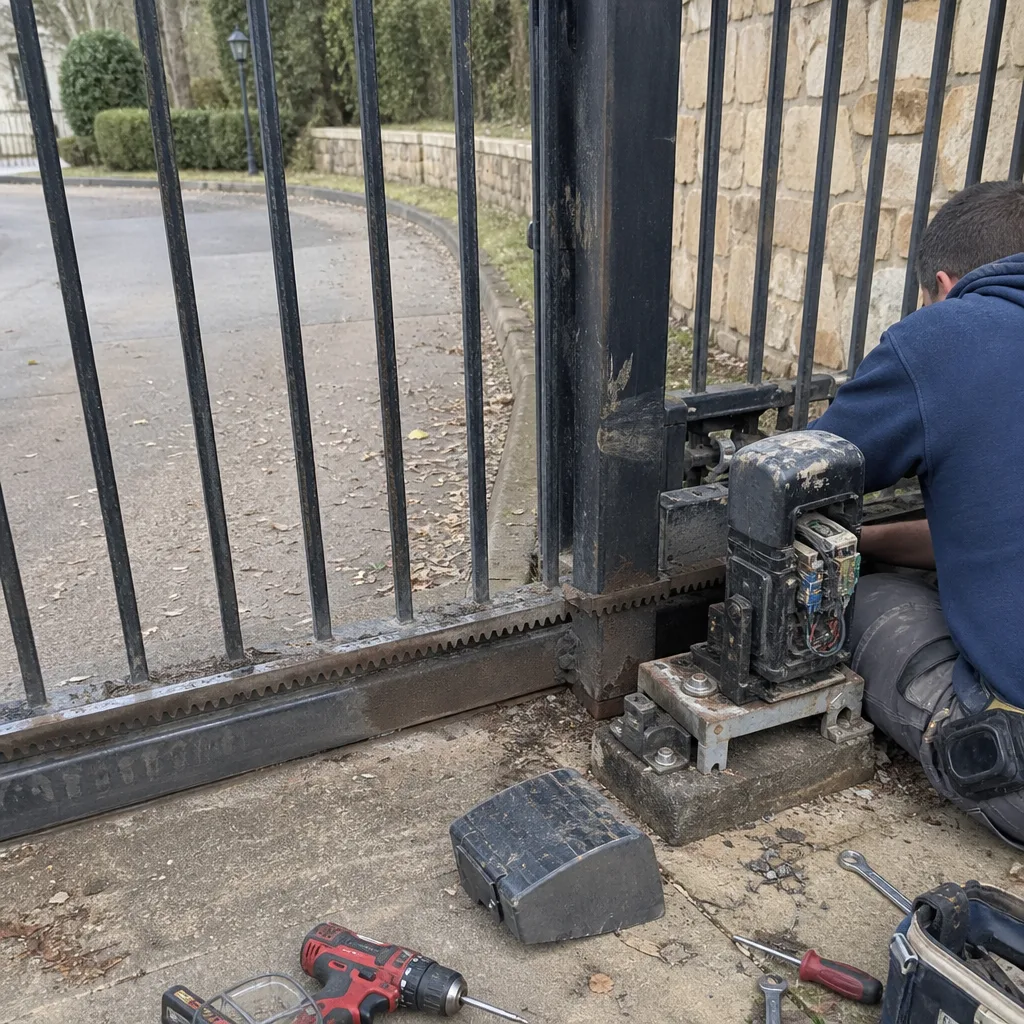 Before
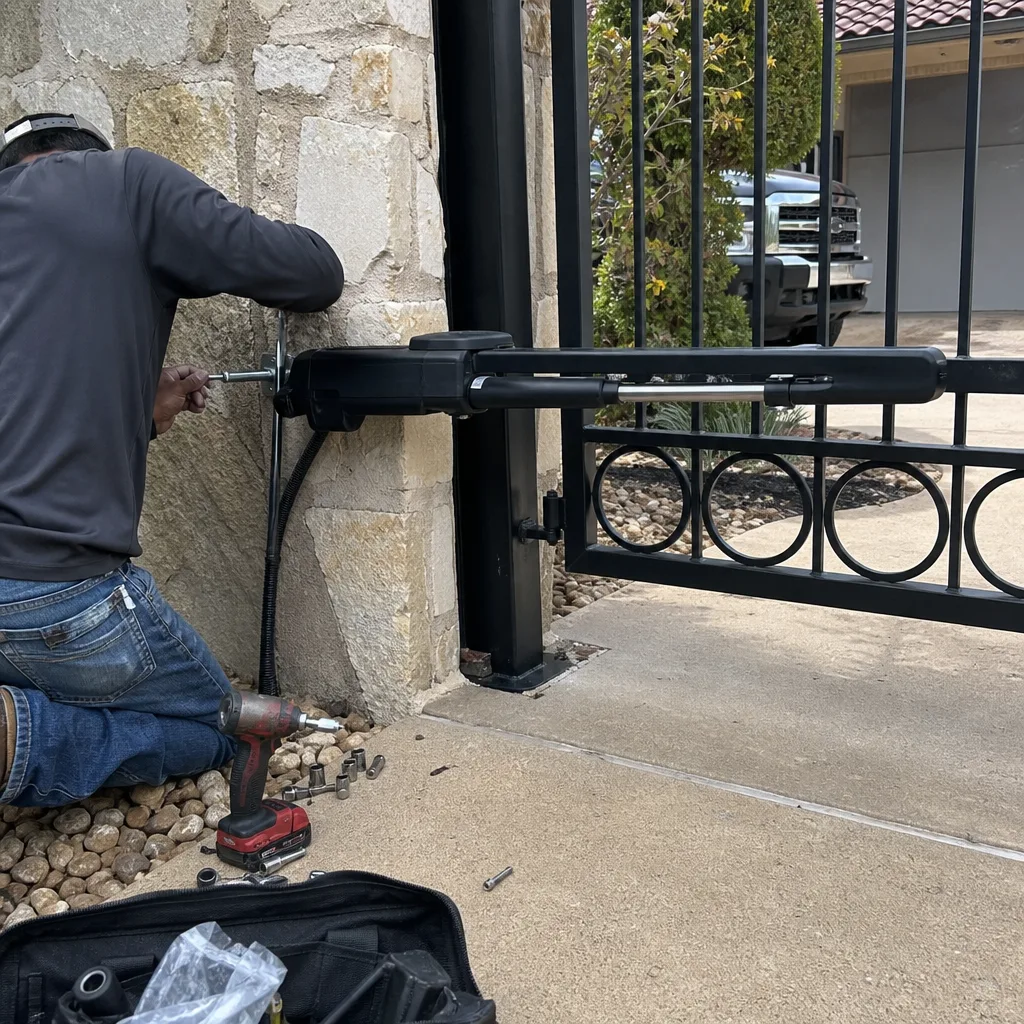 After
After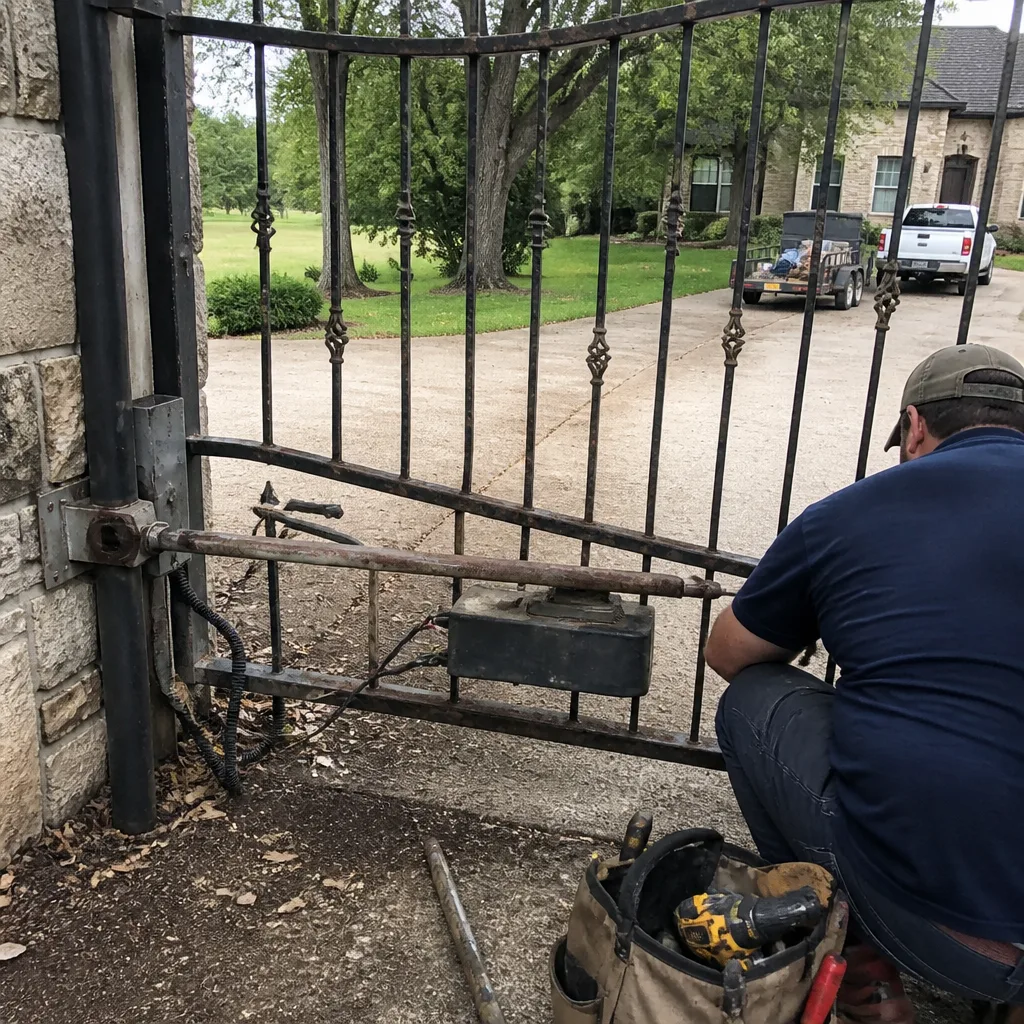 Before
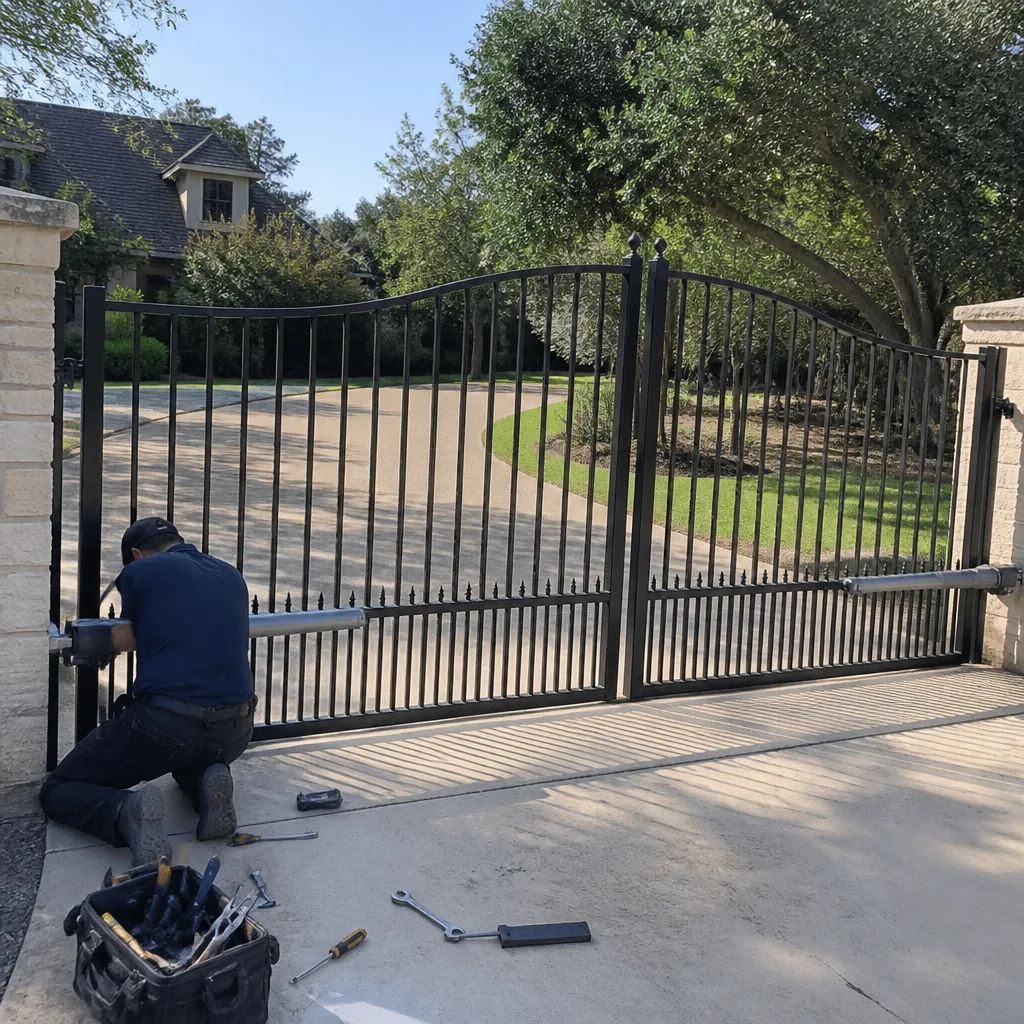 After
AfterGate Repair Maintenance Checklist for Colleyville Homeowners
Most gate failures in Colleyville do not start with a dramatic snap or a smoking motor. They start quietly: a hinge carrying forty extra pounds of sag, a battery slowly cooking in the Texas heat, a photo eye drifting out of alignment by half an inch. After 42 years of opening and closing gates across North Texas, we have learned that the repair you never need is the one you caught three months early. This guide is a plain-language maintenance checklist for Colleyville homeowners who want to keep their driveway gate working like the day it was hung, and know exactly what to check, when to check it, and when to pick up the phone.
Quick Answer
The short version: inspect your gate’s hinges, wheels, opener battery, photo eyes, and safety edges every three months, and give it a full tune-up twice a year. In Colleyville’s clay soil and summer heat, the two items that fail most are the opener battery and the hinge welds. Set a recurring calendar reminder, keep the track clear of grass clippings and gravel, and call a professional the moment you hear a new sound or feel a new vibration.
Table of Contents
- A Seasonal Maintenance Schedule That Works in Colleyville
- The 5-Minute Monthly Visual Check
- Hinges, Wheels, and the Metal That Carries the Weight
- The Opener, the Battery, and the Colleyville Heat
- Photo Eyes, Safety Edges, and Why They Go Out of Alignment
- Clay Soil, Ground Shift, and What It Does to Your Gate
- Lubrication and Cleaning: What to Use and What to Skip
- What a Professional Seasonal Tune-Up Includes
A Seasonal Maintenance Schedule That Works in Colleyville
Colleyville has a climate that punishes outdoor metal in two distinct ways: a long, brutal summer that bakes every component above 100 degrees for weeks at a time, and a winter that swings from mild to freezing in a single afternoon. That means a maintenance schedule built for, say, Houston or San Diego will not fit a gate on Glade Road or a property off Cheek-Sparger. Here is the rhythm that works in this part of Tarrant County.
Spring (March to April): This is the most important service window of the year. The ground has shifted all winter, the cold snaps have stressed the metal, and the first 90-degree days are weeks away. Inspect every hinge pin, every weld, every bolt. Check the opener battery voltage. Test the safety edges and photo eyes. Clean the track thoroughly, because spring grass clippings will pile up fast.
Summer (June to August): The heat is the enemy. Batteries fail faster in sustained 100-degree heat than at any other time of year. The metal expands, which changes the gap tolerances on swing gates and can make slide gates bind. Check the opener battery mid-summer even if you checked it in April. Look for new cracks in welds or powder coating, because heat expansion turns hairline cracks into structural problems.
Fall (September to October): The second full tune-up window. The ground has baked and contracted all summer. Leaves, acorns, and pecans fall into tracks and gear racks. Level the gate if it has settled. Recharge or replace the battery before the first freeze. Adjust the closing force, because colder weather thickens the grease and slows the motor.
Winter (December to February): Colleyville freezes are usually short but sharp. A gate that binds in cold weather is a gate that was not greased in fall. Check that the opener drain holes are clear, that wiring connections are dry, and that the gate still moves freely by hand when the opener is disengaged. If it does not, the motor is working too hard, and that shortens its life by years.
Set two recurring calendar reminders: one in early March, one in early September. Ten minutes of attention twice a year prevents most of the failures we see on service calls.
The 5-Minute Monthly Visual Check
This is not a repair procedure. It is a walk-around, the same way a pilot walks around an airplane before takeoff. You are looking for changes, not fixing them. Do this on the first Saturday of every month, and you will catch 90% of issues before they become breakdowns.
- Stand back and look at the gate’s silhouette. Is it level? Does the top rail line up with the fence line? A sagging gate has a shoulder drop you can see from twenty feet away.
- Watch one full open and close cycle. Listen for new sounds: a click, a scrape, a thump. A gate that used to hum and now grinds is telling you something.
- Look at the gap between the gate and the post. Is it wider at the top than the bottom? That is hinge wear.
- Check the track or the arc of the swing. Debris, gravel, grass clippings, or soil build-up changes the geometry and forces the motor to push harder.
- Touch the opener housing. It should be warm, not hot. If it is hot to the touch after one cycle, the motor is overworking.
- Check the battery indicator, if your opener has one. Most modern openers, including the Drone, Elite, and Ghost Controls units we see all over Colleyville, have a status light that tells you when the battery is weak.
- Look at the ground under the hinge posts. New cracks in the soil pulling away from the concrete is a sign of clay movement, which is the root cause of most swing-gate misalignment in Tarrant County.
Seven steps, five minutes. That is the whole check. If something looks or sounds different, it is different. Make the call before it becomes an emergency.
Hinges, Wheels, and the Metal That Carries the Weight
A driveway gate weighs anywhere from 300 to 900 pounds. Every single ounce of that weight hangs on two or three hinges, or rolls on a pair of wheels. When the hinges sag or the wheels wear flat, the gate stops moving cleanly, and the motor takes the punishment. This is the difference between a hinge replacement that costs a few hundred dollars and an opener replacement that costs ten times that.
What to check on swing gates: Open the gate halfway and try to lift it by the latch side. A properly hung swing gate should have less than a quarter inch of vertical play. If you can lift it and feel it drop, the hinge pins or hinge barrels are worn. Look for rust staining running down from the hinge welds, powder coating flaking around the hinge plates, and any gap between the hinge barrel and the pin that changes as the gate moves. These are the failure signs we see on Colleyville properties between ten and twenty years old, when the original hinges give up.
What to check on slide gates: Run the gate and watch the wheels. They should roll, not skid. Flat spots on a wheel make the gate lurch, and every lurch slams the gear rack against the drive gear. Listen for a regular thump-thump-thump as the gate moves. That is a flat wheel or a bent axle. Also check the guide rollers near the top of the gate. When they wear loose, the gate leans, and a leaning slide gate strips its rack teeth in a matter of weeks.
The safety note: Hinge replacement on a heavy swing gate is not a DIY job. Those hinges are under constant tension, and a gate that falls while you are under it will kill you. This is the part of the checklist where a trained professional with the right blocking and jack stands is non-negotiable. In high-tension situations like this, please do not attempt it yourself.
The Opener, the Battery, and the Colleyville Heat
Batteries are the most replaced component on automated gates in Colleyville, and the Texas sun is the reason. A sealed lead-acid battery sitting inside a black metal cabinet in 105-degree heat degrades at two to three times its normal rate. We replace open batteries every two to three years in this area, even when the manufacturer rates them for five. The heat simply eats them.
Here is how to test your battery at home:
- Disconnect the opener from AC power by unplugging it or shutting off the breaker.
- Cycle the gate open and closed using the battery only.
- If the gate moves noticeably slower, or the opener beeps a low-battery warning, the battery is weakening.
- Reconnect power. If the opener immediately shows a charging state, that confirms the battery is draining faster than it should.
The AC power side matters too. We see a lot of openers in Colleyville plugged into old outdoor outlets that are not GFCI-protected or that have corrosion on the terminals. A poor connection means the battery never fully charges, and the opener runs on a perpetual partial charge. That shortens battery life dramatically. Look at the outlet. If it is rusted, weathered, or the plug fits loosely, have an electrician look at it.
Capacitors fail in the heat as well. When a swing gate starts moving and then stops a few inches later, or a slide gate hums but does not move, the start capacitor is often the culprit. That is a quick, inexpensive fix for a trained tech, but a homeowner who keeps pressing the remote and forcing the motor can burn out the windings and turn a $200 repair into an $800 opener replacement.
We service openers for DoorKing, Elite, Ghost Controls, and Mighty Mule, among others, and the same pattern holds across every brand: in Colleyville, the battery dies first, the capacitor dies second, and the motor dies last, usually because one of the first two was ignored.
Photo Eyes, Safety Edges, and Why They Go Out of Alignment
Every automated gate installed in the last twenty years has two safety systems: photo eyes that create an invisible beam across the gate opening, and safety edges on the leading edge of the gate that reverse it on contact. Both systems fail slowly, and a gate that reverses for no reason or does not stop when it should is a gate with a safety problem.
Photo eyes drift. They are mounted on posts that move. In Colleyville’s clay soil, posts shift seasonally, and a beam that was perfectly aligned in May is off by a quarter inch in September. The fix is usually a simple adjustment, but here is the trap: many homeowners respond to nuisance reversals by adjusting the closing force higher, which overrides the safety system and turns the gate into a 400-pound hazard. Never turn up the force to compensate for a misaligned beam. Fix the beam.
Safety edges crack. The rubber edge runs the full height of the gate. After years of sun exposure and temperature swings, the rubber hardens and splits. A cracked safety edge may still work, but water gets inside and corrodes the sensor strip. Test it monthly by pressing firmly on the edge while the gate is closing. It should reverse immediately. If it does not reverse, or if the rubber is cracked anywhere along its length, replace the edge.
Clean the photo eye lenses. Dust, pollen, spider webs, and sprinkler overspray coat the lenses and weaken the beam. A quick wipe with a dry cloth once a month keeps the beam strong. This is a five-second job that prevents most false reverses.
Clay Soil, Ground Shift, and What It Does to Your Gate
Colleyville sits on expansive clay soil. It swells when wet and shrinks when dry, and it moves everything sitting on it: fences, posts, driveways, and gate frames. If you have lived here through a wet spring followed by a dry August, you have seen the cracks in your yard. Your gate sees them too.
For a swing gate, soil movement tilts the hinge post. A post that leans one degree shifts the gate’s arc enough to drag the latch side against the driveway or bind against the stop. The motor fights that binding on every cycle, and the hinges take an uneven load. Over a season, a one-degree lean becomes a hinge failure. We see this pattern constantly in neighborhoods like McPherson Ranch, Montclair, and along John McCain Road, where the soil is particularly reactive.
For a slide gate, ground shift is more subtle. The track settles unevenly, which creates a low spot. The gate dips as it crosses the low spot, the wheels load and unload, and the drive gear briefly skips a tooth on the rack. You hear it as a tick or a jump. Over time, the track needs re-leveling. The important thing is to re-level the track, not to shim the gate. Shimming the gate hides the problem for a few months and then makes it worse.
What you can do: Keep the soil around the gate posts and track consistently watered, especially in summer. Not soaked, just consistent. The goal is to reduce the shrink-swell cycle. And if you see the gate dragging or hear a skip, get it looked at before the rack teeth wear to points.
Lubrication and Cleaning: What to Use and What to Skip
Most gate owners over-lubricate the wrong parts and under-lubricate the right ones. Here is the short version: lubricate the moving metal parts twice a year, skip the chain unless your opener has one, and never put grease on a gear rack or a belt.
What to lubricate:
- Hinge pins and hinge barrels: A few drops of a good penetrating oil or white lithium grease on each hinge pin, twice a year. Wipe away the excess. This is the highest-value lubrication you can do.
- Wheel axles on slide gates: A light machine oil. Not grease. Grease collects dust and turns into grinding paste.
- The opener’s drive screw or chain: If your opener has a drive screw, use the lubricant the manufacturer specifies, usually a lithium spray. If it has a chain, a light coat of chain lube does the job. Do not use WD-40 as a long-term lubricant. It cleans well but does not lubricate for more than a few days.
What to skip:
- Gear racks: Never grease a gear rack. The grease catches sand and grit, and that grit grinds the teeth down. Gear racks run dry or with a dry lubricant only.
- Belt drives: Belts are self-lubricating. Adding anything attracts dirt and causes slip.
- Photo eyes and safety edges: Keep them clean and dry. No lubricant, ever.
- The track: The track should be clean, not greased. Sweep it out, clear the debris, and let the wheels roll.
While you are at it, clean the gate itself. Rinse off pollen and dust twice a year with a garden hose, check for chips in the powder coating, and touch up any bare metal with a matching paint to keep rust from starting. In Colleyville, the air is not salty, but the sun is relentless, and a bare steel edge will rust from humidity alone within a season.
What a Professional Seasonal Tune-Up Includes
A seasonal tune-up is not a lubrication job. It is a full inspection and adjustment of every system on the gate, done by someone who knows what a correct installation looks like. At Ironworks Gate Co., our $89 Seasonal Tune-Up covers the following:
- Structural inspection: Every hinge pin, hinge weld, wheel, roller, and bolt is checked for wear, looseness, or cracking. We look for the failures that are starting, not just the ones that have already happened.
- Opener diagnostics: Battery voltage under load, capacitor health, motor amp draw, and control board diagnostics. We test the opener the way a mechanic tests an engine, not just whether it opens and closes.
- Force and limit adjustment: The closing force and travel limits drift over time. We reset them to the manufacturer’s specification, which is also the safety specification.
- Safety system testing: Photo eye alignment and sensitivity, safety edge continuity, and the auto-reverse function. If it does not reverse properly, you will know before it matters.
- Gear and track inspection: Rack teeth, chain tension, belt condition, and track level. Any wear is documented and shown to you, with a clear recommendation on when it needs to be addressed.
- Lubrication and cleaning: The right lubricants, in the right places, in the right amounts. Plus a full track and opener housing cleaning.
- Written report: You get a simple, plain-English summary of what we checked, what we found, and what it needs, with a price before any work is started.
We offer this tune-up twice a year, and for most Colleyville gates, twice a year is exactly right. One in spring, one in fall. It catches the seasonal shifts before they become failures.
Common Mistakes to Avoid
- Ignoring a new sound. A gate that starts clicking, grinding, or thumping is telling you something has changed. Ignoring it for three months turns a hinge pin replacement into a hinge replacement, and a hinge replacement into an opener replacement. Call when you hear it, not when it stops moving.
- Turning up the force setting to fix a nuisance reverse. This is the most dangerous mistake we see. The reverse is usually caused by a misaligned photo eye, a dirty track, or a weak battery. Cranking up the force overrides the safety system and creates a real crushing hazard. Fix the cause, not the symptom.
- Greasing the gear rack. It feels like maintenance, but it destroys the rack. Grease holds sand and grit, and Colleyville has plenty of both. Run the rack dry.
- Letting sprinklers hit the opener or the photo eyes. Irrigation overspray is a constant issue in Colleyville. Water gets into the opener housing, corrodes the board, and shorts the safety edges. Adjust your sprinkler heads so they do not spray the gate equipment.
- Propping a gate open with a rock or a block. Homeowners do this when the opener fails, but a propped gate is a swinging gate, and a swinging gate in a windstorm is a missile. Disengage the opener and chain the gate in place instead, or call for same-day service.
- Skipping the battery test during summer. Colleyville heat kills batteries fast. A battery that tested fine in April can be dead by August. Check it monthly in the hot months.
- Painting over rust without treating it first. Rust keeps eating the metal under the paint. You have to remove the rust, treat the surface, and then paint. A quick spray-over hides the problem for a season and then the panel rusts through.
When to Call a Professional
Some maintenance items are DIY, and we have covered those. But there are clear lines where you should stop and call someone with the training and equipment to do the job safely. If your gate has fallen off its hinges or sagged enough to drag, if the opener smells hot, if the safety edge stops working, if you see cracked welds, or if the gate is chain-drive slipping and you do not know the adjustment procedure, call a professional. These are the situations where the risk of injury or worse damage is highest. Ironworks Gate Co. offers free estimates in Colleyville, and we answer the phone live, 24 hours a day. Call (817) 242-5426 and we will walk you through what you are seeing before we ever send a truck.
Frequently Asked Questions
Twice a year, once in early spring and once in early fall. Colleyville’s clay soil and summer heat put more stress on gates than most Texas climates, so the seasonal tune-up is not optional if you want the gate to last. Each visit should include a structural inspection, opener diagnostics, safety system testing, and adjustment.
Gate repair in Colleyville typically ranges from $150 for a minor sensor or limit adjustment to $1,800 or more for a full opener replacement. Hinge replacement usually falls between $300 and $700, battery replacement between $120 and $250, and safety edge replacement between $200 and $450. We quote the full price before any work begins, and you will know the number before we turn a bolt. Call (817) 242-5426 for a free estimate on your specific gate.
In Colleyville, the most common cause is heat. Sustained 100-degree temperatures inside the opener housing degrade batteries at two to three times their normal rate. A poor AC connection, a faulty charging board, or a gate that is binding and forcing the motor to work harder also shortens battery life. If your battery dies more than once a year, there is an underlying issue.
Most repairs we handle in Colleyville are completed in a single visit, and we carry parts for the brands we service on every truck. For a true emergency, like a gate that will not close and leaves your property unsecured, call us at (817) 242-5426. A live person answers 24 hours a day, and we will tell you honestly whether we can get there today.
First, check the circuit breaker for the opener and the battery status. If both look fine, disengage the opener using the manual release handle and try moving the gate by hand. If it moves freely, the problem is the opener or its controls. If it will not move by hand, the gate itself is bound or jammed. Either way, call us and describe what you found. That diagnosis on the phone saves you time and money.
Yes. We have been working on openers in Colleyville since 2013, and our technicians are trained on nine major brands, including DoorKing, Elite, Ghost Controls, and Mighty Mule. Many older openers are still serviceable, and we will tell you honestly when a repair makes sense and when it is time to replace the unit. We will never sell you a replacement you do not need.
The Bottom Line
A gate is a mechanical system, not a monument. It moves hundreds of times a month, it carries hundreds of pounds, and it sits in the harshest climate in the state. The homeowners who get twenty years out of a gate are not lucky. They are consistent: they check it monthly, tune it twice a year, and call at the first sign of trouble. The five-minute walk-around catches the hinge pin before it fails, the photo eye before it misaligns, the battery before it dies. If you live in Colleyville and you have a gate that has not been serviced in the past year, start with the seasonal tune-up. Ten minutes of your time, and a phone call if you need us. We will be there when we say, and we stand behind every job in writing.
For gate repair, gate installation, opener service, or access control in Colleyville, contact Ironworks Gate Co. home or call (817) 242-5426 for a free estimate. We serve the entire Colleyville area and have been keeping gates swinging since 1984.
Written by Victor Salinas, Owner at Ironworks Gate Co., serving Colleyville since 2013.